
$89 AI glasses sold out quickly amid strong consumer demand
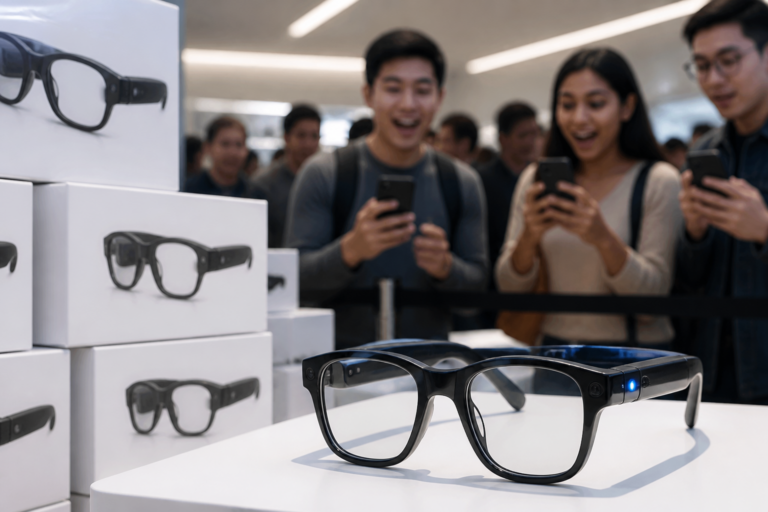
These $89 AI Glasses Sold Out Overnight, and They’re Already Sparking Privacy Fears
A new wave of affordable AI-powered wearable technology has arrived, capturing consumer attention rapidly. These $89 AI glasses sold out almost immediately after their release, highlighting strong demand for smart eyewear while also raising fresh concerns about privacy and surveillance. The swift sellout of this budget-friendly device underscores growing interest in AI integration within everyday accessories, even as questions emerge about the implications of built-in recording and data collection features.
What Happened: The Overnight Sellout of the $89 AI Glasses
Kmart recently introduced a pair of AI-enhanced smart glasses priced at $89, targeting budget-conscious consumers eager to adopt wearable technology. Available both online and in physical stores, the glasses sold out within hours of launch, overwhelming supply chains and sparking discussions across tech forums and social media about the potential impact of such accessible AI devices.
Industry observers noted that the combination of affordability and AI functionality is rare, with most comparable products priced significantly higher. The rapid sellout reflects strong consumer appetite for hands-free AI tools, though early voices have expressed caution regarding privacy trade-offs.
Key Features and Technology Behind the AI Glasses
These glasses integrate a suite of AI capabilities into a compact frame, including voice recognition, real-time translation, and on-demand information retrieval via a connected smartphone app. Equipped with a discreet camera and microphone array, users can capture photos and videos effortlessly while interacting with AI-driven assistants.
– Camera and audio sensors: Positioned to record the wearer’s point of view, these sensors are central to the device’s functionality but have also raised concerns about covert recording.
– Connectivity: Bluetooth and Wi-Fi enable seamless data exchange and cloud processing, enhancing AI responsiveness but increasing risks related to data transmission.
– AI software: Supports real-time language translation, limited facial recognition features, and contextual notifications based on location and user preferences.
These features appeal to consumers seeking convenience in capturing moments, accessing information quickly, and enhancing communication without relying on handheld devices.
Privacy Concerns Surrounding the $89 AI Glasses
Alongside commercial success, privacy advocates, security experts, and users have voiced significant concerns. The glasses’ built-in camera and always-on listening capabilities have sparked debate about the potential for unauthorized recording and surveillance—both by users and possibly through manufacturer data collection practices.
Specific privacy concerns include:
– Covert recording risk: The camera’s discreet design makes it difficult for bystanders to know when they are being filmed.
– Data collection ambiguity: Limited transparency about how recorded data is stored, processed, or shared has unsettled privacy watchdogs.
– Legal compliance questions: Concerns focus on whether the device’s use aligns with local surveillance laws, particularly in public or private spaces.
Public forums have discussed the need for clear indicators when recording is active and stronger regulatory oversight to ensure manufacturers uphold strict privacy standards. While reminiscent of past controversies involving wearable cameras, the lower price point and broad availability amplify the scale of potential privacy intrusions.
Impact on Users, Businesses, and Developers
For consumers, these AI glasses offer hands-free interaction with digital assistants and effortless content capture. However, users must balance these advantages against privacy risks, including unintentionally recording others or exposing personal data if security measures are inadequate.
Businesses face a dual challenge: retailers benefit from the popularity of affordable AI wearables but must manage liability concerns related to customer privacy. Companies considering similar technology for employees must weigh productivity gains against compliance with privacy regulations and ethical considerations.
Developers creating applications for these glasses encounter complex privacy compliance issues. Ensuring software respects user consent, limits data collection, and maintains security is crucial for sustaining trust and avoiding legal repercussions.
Comparison and Context: How These Glasses Fit into the Wearable Tech Market
Compared to higher-end AI glasses from established brands, this $89 model significantly lowers the entry barrier. Premium devices often include advanced sensors, robust security features, and detailed privacy controls, whereas budget models may lack comprehensive safeguards due to cost constraints.
Wearable technology has long been at the center of privacy debates, from early smart glasses to fitness trackers and smart earbuds. Past controversies typically focused on unauthorized recording and data misuse. This latest release reiterates those concerns but on a potentially larger scale, given its affordability and mass-market appeal.
Market trends indicate growing consumer demand for AI-enabled wearables that integrate seamlessly into daily life. However, as these devices become more common, the industry faces increased pressure to balance innovation with responsible privacy practices.
Limitations and Unknowns Surrounding the AI Glasses
Despite significant interest, important details about the AI glasses’ data handling and security remain undisclosed. Information regarding encryption standards, data retention policies, and the extent of cloud processing is not publicly available.
Technical limitations also affect privacy protection. For example, the absence of clear recording indicators or manual shutoff switches could expose users and bystanders to unintentional surveillance. It is also unclear how frequently the manufacturer plans to release firmware updates to address security vulnerabilities or comply with regulatory requirements.
The manufacturer’s future policies on data privacy and transparency remain uncertain, complicating assessments of the device’s long-term implications.
What Happens Next: Industry and Regulatory Responses
Regulators and privacy watchdogs are expected to scrutinize the AI glasses closely, potentially leading to investigations or calls for stricter guidelines governing wearable cameras and AI data collection. Some jurisdictions may consider mandating visible recording indicators or restricting use in sensitive environments.
The manufacturer may respond with software updates to enhance privacy controls or by clarifying data use policies to reassure consumers and regulators. In extreme cases, recalls or sales restrictions could be imposed if privacy risks prove substantial.
More broadly, this situation highlights the challenges facing AI-powered wearables and underscores the need for industry-wide standards that protect user privacy while enabling responsible technological advancement.
Key Takeaways
– These $89 AI glasses sold out overnight, signaling strong consumer interest in affordable wearable AI technology.
– The device’s camera and recording capabilities have prompted immediate privacy concerns among users and experts.
– Limited transparency about data handling and security measures fuels uncertainty about potential misuse.
– Businesses and developers must carefully consider privacy implications alongside convenience and innovation.
– Regulatory bodies are likely to increase scrutiny, possibly resulting in new rules governing wearable AI devices.
Conclusion: What Readers Should Watch Next
The rapid sellout of these $89 AI glasses highlights both the appeal and the challenges of integrating AI into everyday wearables. Consumers interested in such technology should stay informed about privacy practices and exercise caution in environments where recording may be sensitive.
Meanwhile, industry stakeholders and regulators face an urgent need to establish clear frameworks that safeguard individual privacy without hindering innovation. Observers should monitor forthcoming policy developments, manufacturer updates, and technological improvements addressing current concerns.
As AI glasses and similar devices become more prevalent, balancing convenience with privacy rights will remain a critical issue in the evolving landscape of wearable technology.
Frequently Asked Questions
What are the $89 AI glasses that sold out overnight?
The $89 AI glasses are wearable smart glasses equipped with artificial intelligence features, such as voice assistants and real-time information display, that recently gained rapid consumer interest leading to a sellout.
Who is most affected by the privacy concerns related to these AI glasses?
Privacy concerns primarily affect the general public and bystanders who may be unknowingly recorded or monitored, as well as users who need to be aware of data collection and sharing practices.
Are these AI glasses currently available for purchase again?
As of now, the $89 AI glasses have sold out, and restock or availability updates depend on the manufacturer’s announcements.
What privacy risks do these AI glasses pose?
The glasses may raise privacy risks such as covert recording, data collection without consent, and potential misuse of captured audio or video, prompting discussions about regulation and responsible usage.
What features limit the functionality of these $89 AI glasses compared to higher-end models?
Due to their low price, these glasses may have limited battery life, lower-quality sensors, fewer AI capabilities, and less robust security features compared to more expensive smart glasses.
Source: Original reporting

Leave a Reply