
RayNeo iO Smart Glasses Launch with Advanced AR Features
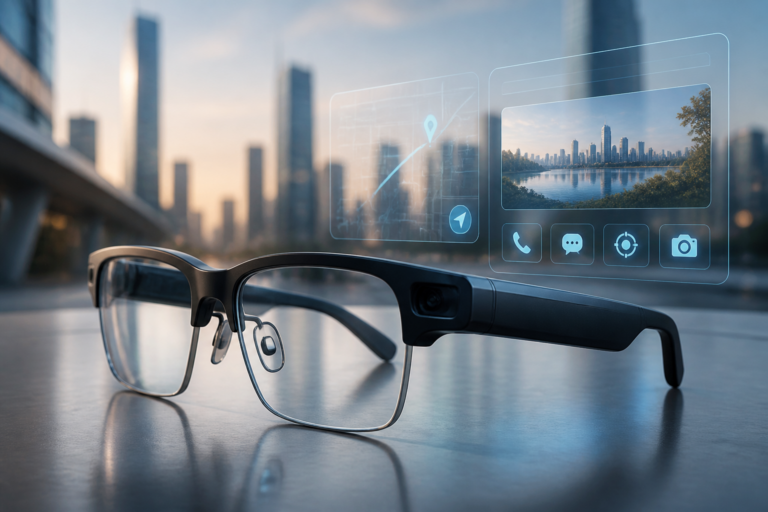
RayNeo iO Smart Glasses is the focus of this technology-news update.
RayNeo aims for its new iO Smart Glasses to reduce reliance on smartphones
The widespread use of smartphones has raised concerns about screen fatigue and excessive dependence on handheld devices. In response, several technology companies have explored smart glasses as an alternative interface. Among these efforts, RayNeo’s recently announced iO Smart Glasses stand out as a product explicitly designed to minimize the need to reach for a phone. According to the original announcement, RayNeo positions the iO Smart Glasses as a wearable solution to address digital distractions and improve user convenience.
What Happened: RayNeo’s iO Smart Glasses Reveal
RayNeo introduced the iO Smart Glasses in a recent announcement outlining the company’s vision for next-generation wearable technology. While detailed technical specifications were not fully disclosed, the presentation emphasized the glasses’ role in addressing common smartphone-related issues such as screen fatigue and constant notifications that interrupt daily activities. RayNeo highlighted its goal of creating a seamless, glanceable interface that integrates with users’ digital lives without the physical and mental interruptions caused by smartphones.
The announcement also referenced collaboration efforts in software development and hardware integration, though no specific partners or technology alliances were named. This suggests RayNeo is working toward building an ecosystem capable of supporting diverse applications and services compatible with the iO Smart Glasses.
Key Features and Technical Details of iO Smart Glasses
Although complete hardware details remain limited, the RayNeo iO Smart Glasses reportedly feature a lightweight design prioritizing comfort for extended wear. The device incorporates a micro-display positioned close to the eye, delivering information via a heads-up display without obstructing natural vision. This design aims to reduce blue light exposure and eye strain commonly associated with smartphone screens.
On the software front, the iO Smart Glasses are said to operate within a custom ecosystem supporting notifications, messaging, fitness tracking, and voice commands. Integration with existing smartphone platforms is expected, allowing users to mirror essential functions on the glasses. Interaction methods likely include touch-sensitive frames, voice recognition, and possibly gesture controls to enable hands-free operation.
Highlighted Features
– Heads-up micro-display for glanceable information delivery
– Lightweight and ergonomic frame design
– Voice and touch-based user interface
– Seamless integration with smartphone ecosystems
– Focus on reducing screen fatigue through display technology
RayNeo positions iO Smart Glasses as a tool to reduce smartphone dependency
RayNeo frames the iO Smart Glasses as a device designed to decrease smartphone reliance. The company emphasizes that by providing critical information directly within the user’s line of sight, the necessity to pull out a phone for routine tasks—such as checking notifications, responding to messages, or accessing fitness data—can be significantly diminished.
Key functionalities intended to curb phone use include:
– Instant access to calls, messages, and alerts without unlocking or handling a phone
– Context-aware notifications that prioritize relevance and minimize distractions
– Voice assistant integration for hands-free commands and queries
– Health and activity monitoring accessible through unobtrusive visual cues
By enabling interactions in a glanceable, hands-free format, RayNeo targets everyday scenarios such as commuting, working, or exercising where using a phone may be inconvenient or unsafe. The iO Smart Glasses aim to become a practical device for quick digital interactions, offering an alternative to habitual phone checking.
Impact on Users, Businesses, and Developers
For consumers, the iO Smart Glasses promise benefits including reduced screen time and improved productivity by limiting interruptions. However, adoption challenges may arise from adapting to new interaction methods and ensuring comfort during prolonged use.
Developers gain an emerging platform for creating applications tailored to glanceable displays and voice-controlled environments. RayNeo’s emphasis on an integrated ecosystem suggests opportunities for innovative apps in communication, fitness, navigation, and augmented reality.
Businesses, particularly in remote work, healthcare, and logistics, could leverage the glasses for enhanced communication and hands-free data access, potentially transforming workflows. Wearable technology companies may also view RayNeo’s approach as a competitive benchmark in efforts to reduce smartphone reliance.
Comparison and Context: Positioning within the Smart Glasses Market
The smart glasses market includes a range of products from augmented reality (AR) headsets to minimalist notification devices. Compared to competitors, RayNeo’s iO Smart Glasses appear to balance functionality and usability, favoring a subtle, everyday wearable design over bulky AR setups.
While companies like Apple and Meta pursue smart glasses initiatives focused on immersive AR experiences, RayNeo emphasizes reducing smartphone dependency through glanceable information delivery and streamlined interactions. This positions the iO Smart Glasses as an alternative rather than a direct competitor in the AR segment.
Market trends indicate growing consumer interest in wearables that enhance convenience without overwhelming users—a niche that RayNeo aims to fill. Their focus on addressing screen fatigue also distinguishes the product.
Limitations and Unknowns Surrounding the iO Smart Glasses
Despite the promising announcement, several details about the iO Smart Glasses remain unclear. The exact release timeline, pricing, and full hardware specifications have yet to be revealed. Battery life—a critical factor for wearables—was not addressed.
Potential user experience challenges include reliable voice recognition in noisy environments and providing intuitive controls. Privacy considerations are also important, as always-on devices equipped with microphones and cameras require robust data security measures.
Furthermore, the glasses’ effectiveness in reducing phone use depends on seamless integration and user willingness to adopt new habits, factors that remain to be seen.
What Happens Next: Future Developments and Expectations
RayNeo is expected to advance toward prototype testing, developer engagement, and eventual product launch in the coming months. Industry observers will be watching for software updates and partnerships that may enhance the iO Smart Glasses’ ecosystem.
If successful, the device could influence the wearable technology landscape by demonstrating that smart glasses can serve as practical smartphone alternatives rather than niche AR gadgets. This may encourage further innovation and competition in the field.
Consumers and developers should monitor forthcoming announcements for details on features, pricing, and availability to evaluate the glasses’ real-world impact.
Key Takeaways
– RayNeo iO Smart Glasses aim to reduce smartphone overuse by providing glanceable, heads-up information.
– The device emphasizes lightweight design, voice and touch interaction, and ecosystem integration.
– RayNeo positions the glasses as a practical alternative for everyday situations where phone use is disruptive.
– Details on launch timing, pricing, and battery life remain undisclosed.
– Success depends on user adoption, developer support, and addressing privacy and usability challenges.
Conclusion
RayNeo intends for its new iO Smart Glasses to be the reason users stop reaching for their phones, addressing growing concerns about screen fatigue and seeking to offer more convenient digital interactions. While the initial announcement offers a promising glimpse of smart glasses’ potential to change user behavior, many critical details remain forthcoming. As RayNeo progresses toward bringing the iO Smart Glasses to market, the broader technology community will closely observe whether this wearable can effectively replace routine smartphone tasks without compromising usability or privacy. For now, the iO Smart Glasses represent a significant step in the evolving wearable device landscape aiming to complement—and potentially supplant—the smartphone experience.
Frequently Asked Questions
What are RayNeo iO Smart Glasses designed to do?
RayNeo iO Smart Glasses aim to reduce the need to reach for your phone by providing hands-free access to notifications, calls, and basic apps directly through the glasses.
Who can benefit from using RayNeo iO Smart Glasses?
Anyone looking for a convenient way to stay connected without constantly using their phone, including busy professionals, commuters, and tech enthusiasts, can benefit from these smart glasses.
When will RayNeo iO Smart Glasses be available and what is the expected cost?
RayNeo iO Smart Glasses were announced with availability planned soon, with pricing expected to be in the mid-range for smart glasses, though exact release dates and prices should be confirmed from official sources.
Are RayNeo iO Smart Glasses compatible with all smartphones?
RayNeo iO Smart Glasses are designed to work with both Android and iOS smartphones, offering basic notification and call features across platforms.
What privacy and security features do RayNeo iO Smart Glasses offer?
RayNeo emphasizes user privacy by processing data locally on the device and using encrypted connections for smartphone pairing, though users should review detailed privacy policies upon release.
Source: Original reporting

Leave a Reply