
touchscreen MacBook launch confirmed with Apple’s latest upd
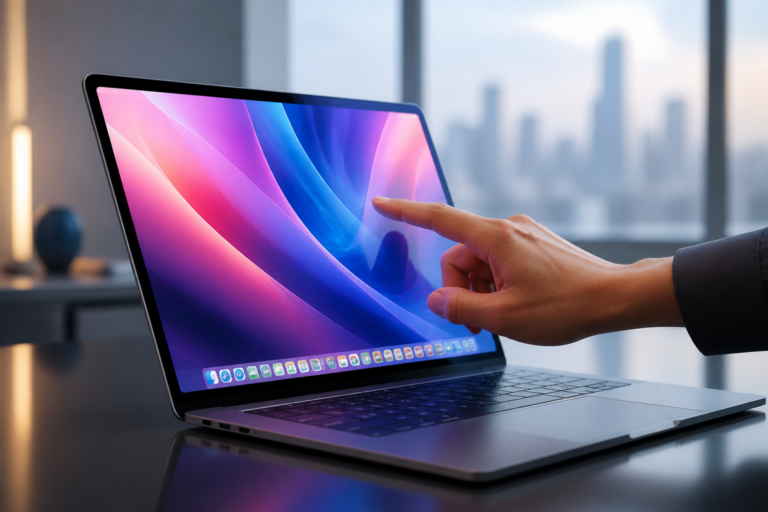
touchscreen MacBook launch is the focus of this technology-news update.
Apple’s First Touchscreen MacBook Arrives in Two Months: What to Expect
Apple is preparing to launch its first touchscreen MacBook, a milestone that signals a notable change in the company’s laptop lineup. After years of avoiding touch input on Mac notebooks, Apple is expected to introduce a touchscreen-enabled MacBook as early as October 2026. This development marks a shift in Apple’s hardware design and user interaction approach, raising questions about its impact on the Mac experience and the wider laptop market.
Why the First Touchscreen MacBook Matters
For more than a decade, Apple has resisted adding touchscreens to its MacBook series, citing ergonomic concerns and a preference for keyboard and trackpad input. In contrast to many Windows laptops that have long offered touchscreen and convertible options, Apple’s MacBooks have maintained traditional input methods. Introducing touch input aligns the MacBook with current computing trends and acknowledges the growing importance of touch as a mode of interaction.
The touchscreen MacBook could redefine user interaction with macOS by combining the familiar keyboard and trackpad experience with direct touch input. It also suggests Apple is exploring ways to further unify its ecosystem, which already includes touch interfaces on iPhones, iPads, and the Touch Bar found on some MacBook Pro models.
Recent Developments Leading to the Touchscreen MacBook
The upcoming touchscreen MacBook follows a series of leaks and rumors gaining traction ahead of Apple’s anticipated fall event. Credible sources indicate Apple plans a significant redesign of the MacBook Pro, potentially named the MacBook Ultra, featuring touchscreen functionality for the first time.
This information is based on supply chain reports, analyst insights, and insider disclosures pointing to a product launch in October 2026. Although Apple has not officially confirmed the touchscreen feature, the convergence of multiple reports strongly suggests it will be a highlight of the forthcoming MacBook update.
Key Details of the Upcoming Touchscreen MacBook
While specific technical details remain undisclosed, reliable leaks have hinted at several features:
– Hardware Changes: The new MacBook is expected to include an advanced display panel optimized for touch input, possibly offering enhanced durability and responsiveness. Design adjustments may be subtle, preserving the MacBook’s slim profile while accommodating the touchscreen.
– Software Adaptations: macOS will likely receive updates to support touch gestures, taps, and other interactions distinct from traditional pointer and keyboard inputs. This may involve interface tweaks to make controls more finger-friendly and seamless integration with existing applications.
– Design Considerations: Early reports suggest Apple may retain physical function keys, potentially replacing the Touch Bar entirely, to maintain tactile feedback alongside touch capabilities.
These indications point to a balanced approach that introduces touchscreen input without disrupting the MacBook’s established design language or user habits.
What to Expect With the Launch Just Two Months Away
As the launch window narrows to October, users and industry observers can begin to set realistic expectations for the touchscreen MacBook:
– Release Timing: Apple’s fall event, typically held in early to mid-October, is the most likely occasion for unveiling the device.
– Product Variants: Multiple configurations may be available, including different screen sizes and performance tiers, consistent with recent MacBook Pro offerings. The rumored MacBook Ultra could serve as the premium, high-performance model featuring touchscreen support.
– Initial Features: Full integration of touch input with macOS is expected, without a radical departure from the MacBook’s current form factor. Speculations about features like Face ID remain unconfirmed.
– Pricing: Exact pricing details are unknown, but industry speculation suggests the touchscreen MacBook will be positioned within the existing MacBook Pro price range.
Overall, Apple appears to be positioning touchscreen as a complementary feature, allowing users to adapt gradually to the new input method.
Impact on Users, Businesses, and Developers
Adding touchscreen input to the MacBook has several potential implications:
– Everyday Users: Touch capabilities may enhance navigation, drawing, note-taking, and media consumption, increasing versatility for both creative and casual tasks. However, some users may find adapting to touch input challenging if they are accustomed solely to keyboard and trackpad.
– Developers: macOS app developers might need to optimize their software to support touch interactions effectively, potentially redesigning UI elements, enabling multitouch gestures, and ensuring accessibility standards accommodate touch input.
– Businesses: Enterprises may evaluate the touchscreen MacBook as a productivity tool, particularly in sectors like design, education, and healthcare where touch input could streamline workflows. IT departments will likely assess security, manageability, and compatibility factors.
Comparison and Context: Touchscreen MacBooks vs. Other Laptops
Apple’s entrance into touchscreen laptops contrasts with the established role of touchscreens across many Windows PCs, which have offered touchscreen and convertible designs for years. These devices cater to users valuing versatility, especially in 2-in-1 form factors.
Apple’s reluctance to adopt touchscreen earlier was partly due to concerns about the ergonomics of reaching up to touch a vertical screen while typing. Instead, Apple introduced the Touch Bar as a limited touch interface, which received mixed reviews.
The new touchscreen MacBook appears to respond to evolving industry trends and user expectations. It also reflects the influence of Apple’s iPad line, which features a touch-first interface and has grown in both capability and popularity.
Limitations and Unknowns Surrounding the Touchscreen MacBook
Despite the anticipation, several aspects remain uncertain or speculative:
– Touchscreen Specifications: Details such as resolution, refresh rate, and touch sampling rate have not been disclosed.
– Software Experience: The degree to which macOS will be optimized for touch input and whether Apple will introduce new gestures or UI paradigms remains unclear.
– Ergonomic Impact: How users will adapt to touch on a clamshell laptop form factor, and how Apple will address potential arm fatigue, is yet to be seen.
– Accessory Compatibility: It is unknown whether Apple will support active stylus input or other accessories alongside the touchscreen.
These open questions will be critical for users and reviewers evaluating the new MacBook’s practicality and innovation.
Post-Launch Expectations and Future Outlook
After the touchscreen MacBook launch, the technology community will closely monitor user feedback and early reviews to assess adoption and satisfaction. Apple may release software updates to refine touch support and expand capabilities based on real-world use.
This launch could also influence Apple’s broader product roadmap, potentially encouraging touchscreen adoption across other Mac models or inspiring hybrid designs. Industry observers will watch whether this move prompts competitors to reconsider their own strategies.
Key Takeaways
– Apple is set to introduce its first touchscreen MacBook as soon as October 2026, ending over a decade without touch input on its laptops.
– The new device, possibly named MacBook Ultra, will feature hardware and software updates tailored to touch interaction while retaining classic MacBook design elements.
– Touchscreen input could expand creative and productivity use cases but raises questions about ergonomics and software adaptation.
– While Apple’s move aligns with broader industry trends, several technical details and user experience factors remain unconfirmed ahead of launch.
With the launch just two months away, Apple is poised to redefine its laptop lineup. Consumers, developers, and businesses should watch for official announcements and early hands-on reviews to understand how this new feature will integrate into their workflows and the evolving landscape of personal computing.
Frequently Asked Questions
What is the new touchscreen MacBook and when will it be released?
The new touchscreen MacBook is expected to be Apple's first laptop featuring a touchscreen display, anticipated to launch in approximately two months.
Which MacBook models are likely to receive the touchscreen feature first?
Reports suggest that the touchscreen feature will debut on a MacBook Air or a redesigned MacBook Pro, but the exact model has not been officially confirmed.
Will the touchscreen MacBook support Apple Pencil or other stylus input?
There is no confirmed information about Apple Pencil or stylus support on the touchscreen MacBook at this time.
How will the touchscreen affect macOS and app compatibility?
macOS will likely be updated to better support touch interactions, but traditional Mac apps may require updates to fully leverage touchscreen capabilities.
Are there any known privacy or security concerns associated with the touchscreen MacBook?
No specific privacy or security issues related to the touchscreen functionality have been reported; Apple is expected to maintain its standard security measures.
Source: Original reporting

Leave a Reply