
Censorship Industrial Complex US Policy Expands Oversight on
Roundtables: Inside the “Censorship-Industrial Complex” Idea Shaping US Policy
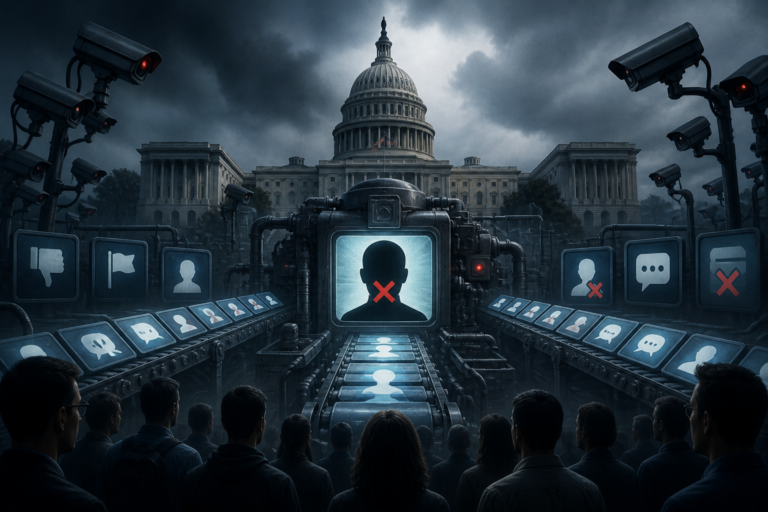
In recent years, the term “Censorship Industrial Complex US Policy” has emerged as a critical framework for analyzing the evolving landscape of content moderation in digital spaces. This concept describes a coordinated network involving government agencies, technology companies, and affiliated research organizations that collectively influence which speech is permitted or restricted online. As the United States continues to navigate the complex balance between free expression, misinformation, and platform accountability, debates and policy discussions framed by this idea have gained increasing significance. For those engaged in digital rights, platform governance, and regulatory trends, understanding the dynamics discussed in recent roundtables offers valuable insight into the future of online communication.
Recent roundtable discussions convening policymakers, technology experts, and advocacy representatives have brought the “censorship-industrial complex” concept into sharper focus. These sessions examine how intertwined actors across government, technology, and academia may collectively shape content moderation practices—often resulting, whether unintentionally or by design, in the suppression of certain ideological viewpoints, particularly conservative speech.
Central to these conversations is the argument that content moderation is not merely a technical or neutral process but is influenced by political and institutional incentives. Participants highlight that this network extends beyond individual companies, encompassing regulatory bodies, funded research centers, and think tanks that provide both the intellectual framework and operational tools for content control on major platforms.
Key voices in these roundtables include bipartisan lawmakers concerned about censorship, representatives from technology companies defending moderation policies, and civil liberties advocates cautioning against mission creep and regulatory overreach. The discourse reflects a complex interplay of interests, with some advocating for stronger regulation to combat harmful content while others warn that such policies may unintentionally curtail lawful expression.
What Happened: Key Developments in Government and Industry Dialogues
The prominence of the censorship-industrial complex narrative surged following a series of government hearings and industry meetings in early 2026 that scrutinized social media moderation practices. These events featured testimony alleging coordination between federal agencies and technology platforms to remove or downrank politically sensitive content.
Legislative proposals have begun to incorporate this framing, with some bills aiming to increase transparency around content moderation decisions and limit government influence over platform policies. Simultaneously, initiatives seeking to impose stricter obligations on platforms to police misinformation and harmful speech have contributed to a policy environment marked by tension between competing priorities.
Public statements and policy papers reflect this dual approach. On one side, lawmakers and watchdog groups emphasize dismantling any perceived censorship-industrial complex that undermines free speech. On the other, industry representatives underline the challenges of moderating vast volumes of user-generated content while complying with legal requirements and societal expectations.
Impact on Users, Businesses, and Developers
– For platform users: The debate raises concerns about access to diverse viewpoints and the potential disproportionate suppression of particular political or social perspectives. Users may notice shifts in content availability as platforms adjust moderation policies in response to new regulatory pressures.
– For technology companies: This discourse intensifies scrutiny of moderation algorithms and decision-making processes, potentially increasing compliance costs and legal liabilities. Companies may need to invest more in transparency mechanisms and appeals processes to effectively address user grievances.
– For developers and tool creators: The evolving regulatory landscape complicates the development of content management tools, particularly those relying on automated moderation or data-driven approaches. Developers must navigate ambiguous or conflicting guidelines while striving to maintain platform integrity and user trust.
Comparison and Context: The “Censorship-Industrial Complex” Versus Previous Content Moderation Debates
Content moderation controversies are not new, but the “censorship-industrial complex” framing introduces a distinct narrative. Historically, debates centered on “content gatekeeping,” platform accountability, or the role of Section 230 protections in the US. These earlier discussions focused on platforms’ responsibilities to manage harmful content without infringing on free speech.
The current framing emphasizes a systemic, coordinated effort involving multiple sectors rather than isolated business decisions by technology companies. It suggests a more entrenched, institutionalized mechanism influencing which content remains online, contrasting with prior critiques that treated moderation largely as a corporate or technological challenge.
This idea also aligns with broader political and social discourses concerning government overreach, media bias, and ideological censorship, reflecting increasing polarization in digital governance debates. It marks a shift from technical and legal considerations toward questions about power structures and influence networks shaping online discourse.
Limitations and Unknowns Surrounding the Concept
Despite its growing influence, the “censorship-industrial complex” concept faces several challenges. A significant limitation is the lack of a clear, universally accepted definition, leading to divergent interpretations among policymakers and experts. This ambiguity complicates efforts to translate the concept into specific regulatory or enforcement actions.
Moreover, concrete evidence substantiating coordinated, intentional suppression across the purported network remains contested. While some criticize moderation policies as biased or opaque, others point to the complex, often automated nature of content review processes that do not align neatly with a coordinated conspiracy framework.
There is also a risk that the term becomes a catch-all for dissatisfaction with content moderation outcomes, potentially oversimplifying nuanced issues and politicizing debates that require careful, fact-based deliberation.
What Happens Next: Future Trajectories and Watch Points
– Legislative activity: Upcoming congressional sessions are expected to revisit digital platform regulation, with potential new bills or amendments addressing transparency, liability, and government interaction with technology companies.
– Continued roundtables and forums: Additional discussions involving diverse stakeholders will likely take place to clarify definitions, share evidence, and build consensus around possible policy frameworks.
– Tech industry responses: Companies may refine moderation practices, increase reporting transparency, and engage more actively with regulators to shape evolving rules.
– Public engagement: Technology news audiences and civil society will have opportunities to monitor developments, advocate for balanced approaches, and contribute to informed public debate.
Key Takeaways
– The “Censorship Industrial Complex US Policy” debate centers on concerns about a coordinated network influencing online content moderation, particularly regarding the suppression of conservative speech.
– Recent roundtables have brought together policymakers, industry representatives, and advocates to explore the origins, scope, and implications of this concept.
– This framing influences legislative proposals and regulatory discussions, increasing scrutiny on technology companies’ content governance.
– Users, businesses, and developers face uncertain impacts as policies evolve, with potential challenges related to freedom of expression, compliance, and platform innovation.
– The idea marks a shift from prior content moderation debates by emphasizing systemic coordination rather than isolated platform decisions.
– However, ambiguity around the concept and contested evidence present challenges for practical policy implementation and risk politicizing complex issues.
Conclusion: What Readers Should Watch Next
The discourse surrounding the “Censorship Industrial Complex US Policy” is shaping a critical front in the ongoing debate over digital speech, governance, and regulation in the United States. Readers interested in technology policy should closely monitor forthcoming legislative initiatives and industry responses, as these developments will materially influence how online platforms manage content and balance competing societal values.
Equally important is engagement with transparent deliberations and diverse perspectives to ensure policies do not inadvertently suppress legitimate expression or innovation. As this debate unfolds, staying informed through trusted sources and critical analysis will be essential for consumers, creators, developers, and businesses navigating the digital ecosystem.
Frequently Asked Questions
What is the 'Censorship-Industrial Complex' in the context of US policy?
The 'Censorship-Industrial Complex' refers to the network of government agencies, technology companies, and advocacy groups collaborating to regulate and moderate online content, influencing US policies on digital speech and information control.
Who are the main stakeholders involved in the 'Censorship-Industrial Complex'?
Key stakeholders include federal agencies such as the Department of Homeland Security, major social media platforms, content moderation firms, and civil society organizations focused on misinformation and online safety.
How does the 'Censorship-Industrial Complex' impact users and online platforms?
It affects users by shaping content moderation policies that can limit certain speech online, while platforms implement these policies to comply with government guidelines and avoid legal or reputational risks.
Are there concerns about privacy and free speech related to the 'Censorship-Industrial Complex'?
Yes, critics raise concerns that the system may infringe on free speech and user privacy by promoting extensive surveillance and content removal practices without transparent oversight.
What are the potential next steps or developments in US policy regarding this issue?
Future steps may include increased legislative efforts to regulate online content, enhanced collaboration between government and tech companies, and debates over balancing security, free expression, and user rights.
Source: Original reporting

Leave a Reply