
missing map of childhood reveals new insights into brain dev
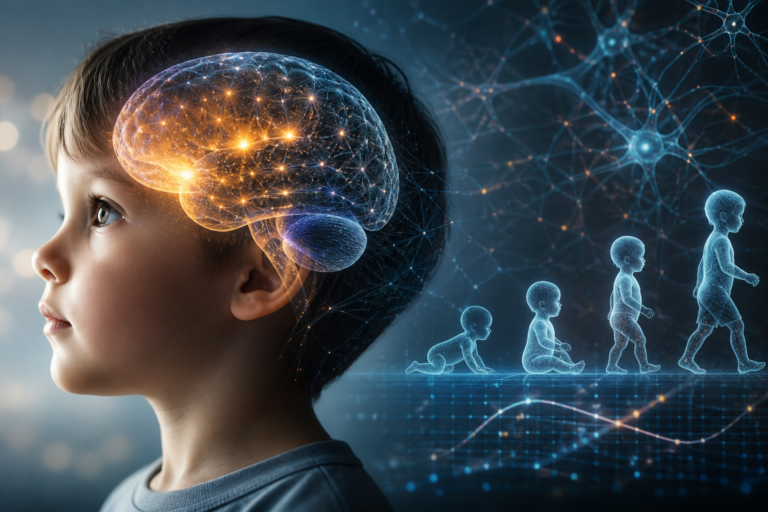
This scientist is helping build a missing map of childhood
Understanding childhood development remains one of the most complex challenges in science and technology today. Despite significant advances in genomics, neuroscience, and data analytics, a comprehensive and integrative framework detailing how children grow biologically, cognitively, and socially has yet to be established. This gap—often described as the missing map of childhood—impedes researchers, healthcare professionals, and educators from tailoring interventions and technologies that support optimal development. Recently, scientist Deanne Taylor has emerged as a leading figure in addressing this void by pioneering efforts to create a holistic map of childhood that integrates diverse data sources and advanced methodologies.
Deanne Taylor’s journey toward this ambitious goal began in 2017, following a presentation on the Human Cell Atlas at the University of Pennsylvania. The Human Cell Atlas seeks to catalog every cell type in the human body at unprecedented cellular resolution. However, Taylor identified a critical limitation: the project’s focus was predominantly adult-centric, leaving the dynamic and formative phase of childhood underrepresented.
With expertise in developmental biology and computational genomics, Taylor has since dedicated her research to constructing a comprehensive developmental atlas specifically for children. Her work aims to decode how gene expression, brain development, environmental influences, and social interactions converge to shape childhood trajectories. The resulting map offers a granular, time-resolved understanding of developmental stages from infancy through adolescence.
Technologies and methodologies driving the childhood map
Taylor’s approach combines multiple technologies. Neuroimaging methods, including MRI and functional MRI, enable visualization of brain development in vivo over time. Longitudinal analyses of large pediatric cohorts capture changes in cognition, behavior, and health markers. At the molecular level, single-cell RNA sequencing reveals evolving gene expression patterns in developing tissues. These heterogeneous data streams are integrated using advanced computational models, including machine learning algorithms, to manage the complexity and volume of information.
Advances leading to the creation of the childhood map
Since initiating this work, Taylor and her team have compiled and analyzed datasets from thousands of children representing diverse populations and environments. Collaborations with institutions such as the University of Pennsylvania, children’s hospitals, and data science centers have been crucial in aggregating multi-modal data. The scale of this research effort is unprecedented, encompassing biological, cognitive, social, and environmental dimensions.
A key advance includes linking gene expression profiles to specific developmental milestones, which provides insight into how molecular changes correspond with physical and cognitive growth. Additionally, the team has begun mapping how environmental variables—such as socioeconomic status, nutrition, and exposure to pollutants—interact with biological processes, illustrating the complex interplay shaping childhood outcomes.
Key details: How the map is being constructed
The comprehensive childhood map integrates several categories of data:
– Biological data: genomic sequences, epigenetic markers, protein expression, and neuroimaging data capturing brain structure and function.
– Cognitive data: assessments of learning, memory, language development, and behavioral patterns collected through standardized testing and observational studies.
– Social data: information on family dynamics, peer interactions, educational settings, and community environments.
– Environmental data: exposure to pollutants, nutrition records, physical activity levels, and socioeconomic indicators.
To manage and interpret this diverse data, Taylor’s team employs artificial intelligence techniques capable of recognizing patterns across modalities and over time. AI models assist in predicting developmental trajectories and identifying early markers of atypical development. Nevertheless, integrating these heterogeneous datasets presents significant challenges, including ensuring data quality, harmonizing measurements across studies, and addressing privacy concerns.
Impact on users, businesses, and developers
Filling the missing map of childhood carries broad and multifaceted implications:
– Healthcare providers and pediatric specialists gain access to a detailed developmental atlas that can improve early diagnosis of neurodevelopmental disorders, inform personalized treatment plans, and guide preventive care strategies.
– Educational technology developers can leverage the map to create adaptive learning tools tailored to children’s cognitive stages and individual needs, potentially enhancing educational outcomes.
– Policymakers and child welfare organizations benefit from data-driven insights into how social and environmental factors affect childhood development, supporting better-informed policies, targeted interventions, and resource allocation for vulnerable populations.
Comparison and context: How this project fits within current childhood research
Previous research efforts have often focused on isolated aspects of childhood development—such as genomics, brain imaging, or behavioral studies—without comprehensive integration. Existing developmental charts typically generalize from limited population data or focus heavily on postnatal milestones without molecular or environmental context.
Taylor’s approach bridges these gaps by providing a multidimensional, longitudinal perspective. Her work aligns with global initiatives aimed at improving childhood health, such as the World Health Organization’s focus on early childhood development, but introduces a distinctive technological dimension through the integration of AI and multi-omics data. This holistic framework establishes a new standard for developmental science.
Limitations and unknowns: Current gaps and challenges
Despite progress, significant challenges remain in completing the missing map of childhood:
– Data insufficiencies: Certain populations and age groups remain underrepresented, limiting the generalizability of findings. Longitudinal tracking over extended periods is costly and logistically complex.
– Ethical considerations: Collecting sensitive data from children raises privacy concerns and requires strict consent protocols. Balancing data sharing with protection of individual rights remains an ongoing challenge.
– Technical limitations: Current imaging and sequencing technologies have resolution and sensitivity constraints. Additionally, integrating disparate data types into unified models continues to be computationally demanding.
What happens next: Future directions and potential developments
Looking ahead, Taylor’s team plans to expand data collection by incorporating wearable sensors that monitor physiological and behavioral signals in real time. Combining these with AI-driven predictive models could enable dynamic tracking of childhood development and early detection of risks.
Further collaboration with international research consortia is anticipated to broaden demographic representation and foster standardization of data protocols. While the timeline for publicly accessible versions of the childhood map remains undefined, incremental releases of datasets and analytical tools are expected in the coming years to facilitate adoption by researchers, clinicians, and developers.
Key takeaways
– The missing map of childhood represents a critical gap in developmental science that Deanne Taylor is addressing through integrative, data-driven research.
– Taylor’s work combines biological, cognitive, social, and environmental data analyzed with advanced AI technologies to create a multidimensional atlas of childhood.
– The resulting map holds potential to transform healthcare, education, and policy by providing detailed insights into childhood development and its influencing factors.
– Challenges remain in data collection, ethical governance, and technical integration, but ongoing efforts aim to overcome these barriers.
– Future expansions may include real-time monitoring and broader collaborations, moving closer to an accessible, actionable childhood developmental map.
Conclusion
The effort to build the missing map of childhood, led by Deanne Taylor, marks a significant advancement in understanding human development. By integrating diverse data streams and leveraging AI, this research promises to address longstanding gaps that have hindered personalized medicine, targeted education, and effective child welfare strategies. Although technical, ethical, and logistical challenges persist, the trajectory of this work suggests that a comprehensive, dynamic map of childhood is within reach. Stakeholders across healthcare, technology, and policy sectors should monitor forthcoming developments, as this map could become a foundational resource shaping how society supports its youngest members in the years ahead.
Frequently Asked Questions
Who is the scientist working on the missing map of childhood?
The scientist is a researcher focused on childhood development, using technology and data to create a comprehensive map of early life experiences.
What is the purpose of building a missing map of childhood?
The purpose is to better understand childhood development by visualizing how different factors affect growth, helping improve health and educational outcomes.
Who can benefit from the childhood map being developed?
Parents, educators, healthcare providers, and policymakers can use the map to tailor interventions and support for children's developmental needs.
Is the childhood map accessible to the public or professionals?
Access depends on the project stage, but typically such maps are made available to researchers and professionals, with some public access for educational purposes.
What are the limitations of the current childhood mapping efforts?
Limitations include incomplete data, privacy concerns, and the challenge of capturing diverse childhood experiences across different cultures and environments.
Source: Original reporting

Leave a Reply