
cloning save species: New Advances Boost Endangered Animal R
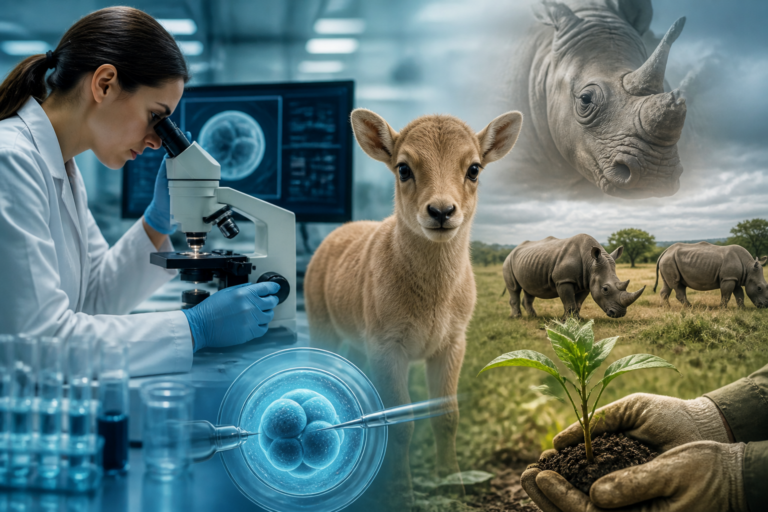
Why Advances in Cloning Save Species—and Spark Debate Over Human “Organ Sacks”
Recent breakthroughs in cloning technology have renewed discussions about its dual potential: preserving endangered species and creating human “organ sacks.” These developments reflect rapid progress in genetic science and bioengineering, enabling researchers not only to replicate threatened animals but also to explore the laboratory growth of human tissues and organs for transplantation. The implications for conservation, medicine, and ethics are significant, drawing attention from technology audiences tracking biotech innovation and regulatory developments.
Understanding Cloning: From Early Techniques to CRISPR-Enhanced Innovations
Cloning involves producing genetically identical copies of an organism or cell. The most recognized method, somatic cell nuclear transfer (SCNT), entails transferring the nucleus of a donor cell into an egg cell whose nucleus has been removed. This technique was pivotal in cloning Dolly the sheep in 1996 and has since been applied to various animal species.
More recently, gene-editing tools such as CRISPR have refined cloning processes. CRISPR enables precise editing or removal of specific chromosomes or genes to influence traits in cloned organisms. For instance, a recent study demonstrated removal of the Y chromosome from male mouse embryos, resulting in female clones genetically identical to the male donors except for the missing Y chromosome. Such precision enhances cloning’s applications but also raises new ethical and biological questions.
Cloning Could Be Used to Save Species—or Make Human “Organ Sacks”
Cloning offers promising avenues for conserving biodiversity amid threats like habitat loss, climate change, and poaching. By producing cloned individuals from endangered or extinct species, conservationists aim to increase population numbers, maintain genetic diversity, and restore ecological balance. Cloning may serve as a last-resort strategy when natural reproduction is no longer feasible due to critically low population sizes.
Conversely, cloning technologies have ignited debate over their potential to create cloned human tissues or organs—sometimes controversially termed “organ sacks.” This approach involves growing human organs from cloned cells in laboratories to provide compatible transplants, potentially addressing organ shortages and reducing rejection risks. However, cloning entire humans or producing cloned bodies solely for organ harvesting raises profound ethical concerns surrounding human dignity, consent, and identity.
Why This Matters
– Conservation cloning could protect endangered species from extinction.
– Cloned human organs have the potential to revolutionize transplant medicine with genetically matched tissues.
– Ethical boundaries related to human cloning and “organ sacks” remain deeply contested.
Current Research and Experimental Applications in Cloning
Several high-profile initiatives aim to clone endangered animals, including efforts to revive species such as the northern white rhinoceros and rapidly declining amphibians. In these cases, cloning complements habitat protection and breeding programs, providing a genetic reservoir when natural populations cannot sustain themselves.
In medicine, scientists have made progress cultivating human organs from cloned cells. Experiments focus on growing liver, kidney, and heart tissues in vitro, with the eventual goal of producing functional organs for transplantation. While promising, these techniques remain in early experimental stages and face challenges such as achieving organ maturity, vascularization, and successful integration with recipients.
Regulatory approaches to cloning vary significantly worldwide. Many countries prohibit reproductive human cloning but permit some forms of therapeutic cloning and stem cell research under strict oversight. This regulatory patchwork reflects ongoing societal debate and scientific uncertainty about cloning’s risks and benefits.
Impact on Users, Businesses, and Developers
For conservation groups, cloning offers a potentially vital supplement to conventional species recovery methods. Biotechnology companies specializing in genetics increasingly collaborate with wildlife agencies to develop cloning protocols tailored to endangered species.
The medical field could benefit from reduced transplant waiting lists and lower organ rejection rates if cloned organs become viable. This would represent a notable shift in healthcare delivery, potentially reducing costs and improving outcomes.
At the same time, developers of cloning-related biotech tools—including gene-editing platforms, cell culture systems, and bioinformatics software—are likely to experience growing demand. These technologies require continual refinement to address biological complexities and scalability challenges.
Comparing Cloning to Alternative Biotechnologies
Cloning is often considered alongside gene editing, stem cell therapies, and synthetic biology, each with distinct advantages and challenges. Gene editing allows precise genetic modifications without replicating entire organisms, while stem cell therapies focus on regenerating tissues without cloning whole genomes.
Compared to these alternatives, cloning can be more costly and technically demanding, especially with complex organisms. Ethical concerns also differ; cloning entire animals or humans raises unique issues compared to modifying genes or cells.
Public perception tends to be cautious, particularly regarding human cloning. Legal frameworks similarly reflect this caution, often restricting reproductive cloning while allowing limited therapeutic uses.
Limitations, Risks, and Unknowns in Cloning Applications
Cloning faces technical and biological hurdles. A major concern is reduced genetic diversity, which can leave populations vulnerable to disease and environmental shifts. Additionally, cloning processes may introduce genetic errors or abnormalities, affecting the health and longevity of clones.
The notion of human “organ sacks” involves unresolved ethical dilemmas, including the moral status of cloned tissues, consent for using cloned cells, and potential exploitation. The environmental impact of reintroducing cloned species into the wild also remains uncertain, with risks such as ecosystem disruption or unintended genetic consequences.
What Happens Next? Future Directions and Regulatory Outlook
Emerging research aims to improve cloning’s precision, efficiency, and safety, often integrating CRISPR and other gene-editing technologies. Investment is growing in both conservation cloning and medical applications involving cloned tissues.
Regulators worldwide are expected to revise or tighten guidelines as cloning technologies advance and public debate evolves. International cooperation may be necessary to harmonize policies and address ethical concerns globally.
Although fully functional cloned organs and widespread species restoration via cloning remain future goals, incremental progress suggests practical applications could emerge within the next decade. Close attention to scientific developments and regulatory responses will be essential for stakeholders in conservation, medicine, and biotechnology.
Key Takeaways
– Cloning efforts to save species hold promise for biodiversity preservation but require careful management of genetic diversity and ecological effects.
– Laboratory-grown cloned human organs could transform transplant medicine but face significant scientific and ethical challenges.
– Current regulatory frameworks are cautious, reflecting societal concerns about cloning’s implications.
– Alternative biotechnologies provide complementary or competing approaches that will influence cloning’s future role.
Conclusion: Navigating the Complex Future of Cloning Technologies
Advances in cloning highlight a complex balance between potential benefits and ethical challenges. The technology’s dual-edged nature—offering tools to save species while raising concerns about human “organ sacks”—underscores the need for thoughtful oversight. For conservation, cloning is a powerful option to combat extinction and preserve genetic heritage. In medicine, it holds promise for addressing organ shortages and improving patient care.
These developments call for transparent public dialogue, robust ethical frameworks, and collaborative efforts among scientists, policymakers, businesses, and the public. Monitoring emerging research, regulatory changes, and societal attitudes will be vital to understanding how cloning technologies will shape biodiversity conservation and human health in the years ahead.
Frequently Asked Questions
What is cloning and how could it help save endangered species?
Cloning is a process of creating a genetically identical copy of an organism. It could help save endangered species by producing new individuals from preserved genetic material, potentially boosting population numbers and genetic diversity.
How might cloning be used to create human “organ sacks” for transplantation?
Scientists are exploring cloning techniques to grow human-compatible organs in lab-grown tissues or animals, sometimes referred to as 'organ sacks,' which could provide transplant organs without rejection issues.
Are cloned animals or organs currently available for medical use?
While cloning animals like sheep and some endangered species has been achieved, cloned organs for human transplantation remain experimental and are not yet available for clinical use.
What are the ethical concerns associated with cloning for species preservation or organ production?
Ethical concerns include animal welfare, genetic diversity loss, potential exploitation of cloned beings, and the moral implications of creating human tissues or organs in non-human hosts.
What are the main scientific limitations of cloning technology today?
Cloning faces challenges such as low success rates, genetic defects in clones, high costs, and incomplete understanding of long-term effects on cloned organisms or tissues.
Source: Original reporting

Leave a Reply