
Dacia Spring EV Europe Sales Surge as Affordable EV Demand G
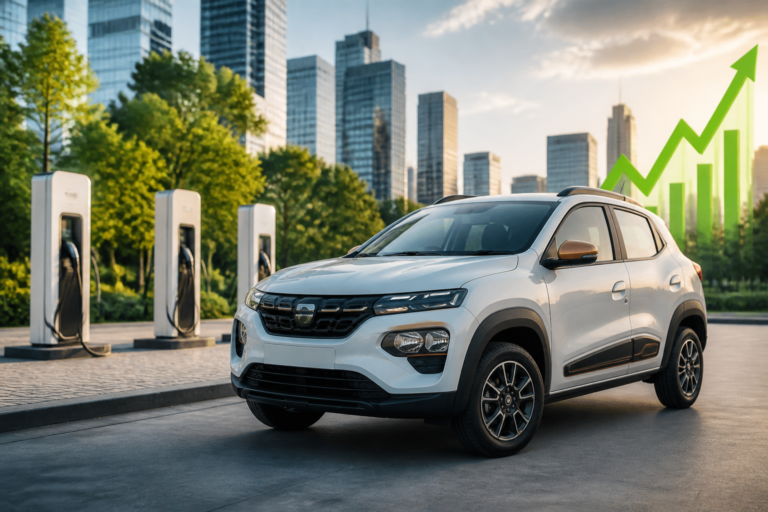
Dacia Spring EV Europe is the focus of this technology-news update.
Renault is building its €17,900 Dacia Spring EV in Europe to qualify for local subsidies
Renault has announced plans to produce its affordable electric vehicle, the Dacia Spring EV, within Europe. This strategic move enables the company to qualify for regional subsidies aimed at promoting sustainable transportation. By shifting production to Europe, Renault aligns the Dacia Spring EV with subsidy criteria while enhancing its competitiveness amid rising demand for electric vehicles. This decision reflects broader automotive industry trends where local manufacturing increasingly shapes market dynamics and pricing.
Renault’s decision to manufacture the Dacia Spring EV in Europe
Until now, the Dacia Spring EV was assembled outside Europe, limiting its eligibility for certain national incentives. Renault’s recent announcement confirms the transition to European production sites to meet subsidy requirements and simplify logistics. While the company has not disclosed specific plants or timelines, reports indicate manufacturing will commence soon at existing European facilities.
This relocation responds to evolving government policies in key European markets that increasingly mandate local production for electric vehicles to qualify for purchase incentives. The shift aligns with a wider industry effort to foster greener, regionally sustainable supply chains.
Key details of the €17,900 Dacia Spring EV production strategy
With a price around €17,900 before subsidies, the Dacia Spring EV is positioned as one of Europe’s most affordable electric vehicles. This pricing targets entry-level buyers and urban drivers seeking cost-effective, zero-emission mobility.
European production is expected to streamline logistics, reduce delivery times, and strengthen supply chain resilience. Local manufacturing also allows Renault improved quality control and faster adaptation to market demands or regulatory changes.
This approach supports Renault’s broader electric vehicle ambitions, including expanding its portfolio with electrified models and leveraging economies of scale within European manufacturing hubs.
Impact on users and market players
– Consumer benefits: European customers gain enhanced access to subsidies, which can significantly reduce the effective purchase price of the Dacia Spring EV.
– Improved availability: Local production should shorten waiting times and potentially increase vehicle supply in European markets.
– Competitive positioning: Renault solidifies its presence in the affordable EV segment by offering a locally made, subsidy-eligible vehicle.
For industry players, Renault’s move highlights the critical role of local manufacturing in securing government incentives and navigating a complex regulatory environment. This may prompt other manufacturers to reconsider their production strategies.
Renault is building its €17,900 Dacia Spring EV in Europe to qualify for local subsidies
Several European countries have implemented or expanded subsidies to accelerate electric vehicle adoption. These programs often require qualifying vehicles to be produced domestically or regionally to support local employment and reduce environmental impacts associated with long-distance shipping.
By manufacturing the Dacia Spring EV in Europe, Renault ensures compliance with these criteria, making the vehicle eligible for subsidies that can lower the purchase price by several thousand euros, depending on the country. Such eligibility is crucial for the Spring EV, where affordability is a key selling point.
While subsidy programs vary by country, they share common objectives: promoting green mobility, supporting regional economic development, and fostering innovation in sustainable automotive technologies. Renault’s production shift directly responds to these evolving policy frameworks.
Comparison and context: Renault’s move within broader industry trends
Renault’s decision aligns with an industry-wide shift toward localizing EV production in Europe. Other manufacturers have similarly modified their strategies in response to subsidy requirements and supply chain considerations, often establishing or expanding European production lines for electric models.
This trend also reflects geopolitical factors, including recent trade tensions and global supply chain disruptions. Local production reduces reliance on imports and enhances manufacturing flexibility.
European subsidy schemes in countries such as Germany, France, and Spain have been instrumental in shaping these manufacturing decisions. The requirement for vehicles to be assembled within the region to qualify for incentives has become a key factor in production planning.
Limitations and unknowns
– Production challenges: Expanding or relocating manufacturing to Europe may require substantial capital investment and operational adjustments.
– Policy uncertainties: Subsidy programs may evolve or be phased out, potentially impacting profitability and pricing strategies.
– Supply chain risks: Although local production mitigates some risks, component sourcing and raw material availability remain concerns.
Renault will need to manage these factors carefully to sustain the benefits of local production and subsidy eligibility over the medium to long term.
What happens next: Future outlook for Renault and the Dacia Spring EV
Production ramp-up of the Europe-based Dacia Spring EV is expected soon, with Renault likely to announce specific milestones as manufacturing scales. The company may also consider extending subsidy-driven production strategies to other models within its electric portfolio.
This approach could strengthen Renault’s position in Europe’s affordable EV segment and contribute to overall market growth. The Dacia Spring EV’s progress will be closely observed as a case study in how subsidy policies influence manufacturer decisions and market dynamics.
Key takeaways
– Renault’s decision to produce the Dacia Spring EV in Europe is primarily driven by the need to qualify for local subsidies that significantly reduce the vehicle’s effective price.
– The €17,900 Dacia Spring EV targets budget-conscious consumers seeking affordable electric mobility in Europe.
– Local manufacturing aligns with European subsidy requirements and enhances supply chain resilience.
– Renault’s move reflects broader industry trends toward localized EV production driven by regulatory and geopolitical factors.
– Challenges include managing production costs, adapting to subsidy policy changes, and ensuring supply chain stability.
Conclusion
Renault’s choice to build the €17,900 Dacia Spring EV in Europe to qualify for local subsidies highlights the increasing importance of regional manufacturing in the electric vehicle market. This strategy benefits consumers through improved pricing and availability while reinforcing Renault’s competitive position in Europe’s EV landscape. However, its success depends on Renault’s ability to navigate production complexities and adapt to shifting subsidy policies. As the European EV market expands, Renault’s approach may serve as a model for manufacturers balancing affordability, sustainability, and regulatory compliance. Industry observers should monitor subsidy frameworks and Renault’s production scaling in the coming years.
Frequently Asked Questions
What is the significance of Renault building the Dacia Spring EV in Europe?
Renault is manufacturing the Dacia Spring EV in Europe to ensure the vehicle qualifies for local government subsidies that often require cars to be produced within the region.
How much does the Dacia Spring EV cost with the new European production?
The Dacia Spring EV is priced at around €17,900, making it one of the most affordable electric vehicles available in the European market.
Who benefits from Renault’s decision to produce the Dacia Spring EV in Europe?
European consumers benefit from lower prices due to subsidies, and local economies gain from job creation and supporting the regional automotive industry.
Are there any changes to the Dacia Spring EV’s specifications due to European production?
There are no widely reported changes to the vehicle’s specifications; the focus is on production location to meet subsidy requirements.
When will the European-made Dacia Spring EV be available for purchase?
Renault has started or plans to start production in Europe to meet demand and subsidy criteria, with availability expected following the commencement of local manufacturing.
Source: Original reporting

Leave a Reply