
Google Health app roadmap reveals new features and updates f
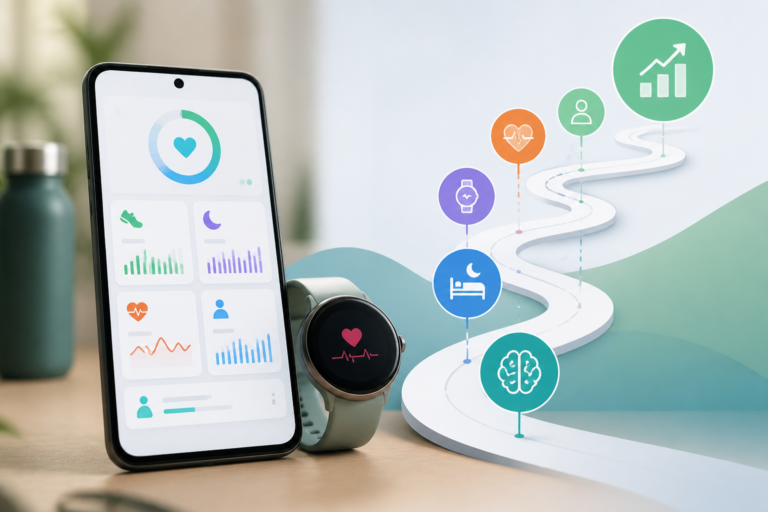
What’s left to fix on the Google Health app roadmap
The Google Health app has become an important tool for users managing their digital health data. By integrating various health metrics, medical records, and personalized insights, it serves as a central hub for health management on Android devices. Despite its expanding capabilities, significant areas require improvement, as outlined in recent updates and the publicly shared Google Health app roadmap. Examining what’s left to fix on the Google Health app roadmap offers valuable insight into the app’s future direction and the broader challenges within digital health technology.
Recent developments in the Google Health app
Following a major redesign earlier this year, the Google Health app has undergone several updates aimed at enhancing user experience and functionality. Notable improvements include better integration with wearable devices, expanded support for importing medical records, and the addition of more tailored health insights derived from user data. These changes illustrate Google’s effort to make health information more accessible and actionable for everyday users.
Google has also announced partnerships with healthcare providers and data platforms to widen the range of information available within the app. These collaborations aim to improve the quality and comprehensiveness of health data accessible to users and clinicians alike.
Key milestones in the app’s evolution
– Launch of a redesigned user interface emphasizing clarity and ease of navigation
– Expanded integration with Android-compatible wearables for real-time health tracking
– Introduction of medical record synchronization from select healthcare systems
– Enhanced user privacy controls allowing for more granular data sharing preferences
What’s left to fix on the Google Health app roadmap
Despite progress, the Google Health app roadmap reveals several unresolved issues and feature gaps that continue to impact user experience and overall utility. Feedback from users and expert analysis highlight several areas where the app falls short of expectations or industry standards.
Outstanding issues include:
– Incomplete interoperability: The app still struggles with seamless data exchange across a wide range of third-party health devices and electronic health record (EHR) systems, limiting the completeness and accuracy of health data presented
– Real-time data syncing delays: Occasional lag in synchronizing health metrics affects timely monitoring and intervention
– Limited customization of health insights: Current algorithms offer generalized suggestions but lack the ability to personalize based on individual health contexts and preferences
– Insufficient mental health tracking features: Mental health metrics and support tools remain underdeveloped compared to physical health tracking
– Gaps in chronic condition management tools: Users managing chronic illnesses note the absence of comprehensive features such as medication reminders, symptom tracking, and integration with clinical care plans
– Data export and portability restrictions: Limited export options make it difficult for users to transfer data to other platforms or share it with healthcare providers in preferred formats
Impact of current limitations on users, developers, and healthcare providers
The unresolved issues on the Google Health app roadmap have tangible consequences for all stakeholders involved in digital health management.
For users:
– Reduced confidence in the accuracy and completeness of health data
– Frustration due to limited customization of health insights and incomplete integration of devices and records
– Potential disengagement from the app, undermining ongoing health monitoring and preventive care
For developers:
– Difficulties in creating seamless integrations or third-party extensions due to interoperability constraints
– Increased complexity in developing applications that depend on real-time, accurate data streams
For healthcare providers:
– Limitations in confidently using app data for clinical decision-making when data is incomplete or delayed
– Challenges incorporating patient-generated data into clinical workflows without standardized formats or comprehensive chronic disease management tools
Comparison with competing health apps and platforms
When compared with major health platforms such as Apple Health and Samsung Health, Google Health’s unresolved challenges become more apparent. Apple Health provides robust integration with a wide ecosystem of devices and apps, coupled with a strong emphasis on privacy and user control. Samsung Health offers extensive fitness and wellness tracking features, emphasizing user engagement through gamification and community interaction.
Google Health’s current gaps—such as limited mental health tracking and incomplete interoperability—contrast with competitors’ broader feature sets in these areas. However, Google’s strengths in search, artificial intelligence, and cloud infrastructure present potential advantages that could be realized once these issues are addressed.
Lessons from competitors’ approaches:
– Investing in deeper partnerships with healthcare providers to enhance EHR integration
– Enhancing user customization and data portability features to empower individual health management
– Incorporating AI-driven, personalized health recommendations based on comprehensive data sets
Technical and privacy concerns that remain
Data security and privacy continue to be foundational concerns for any health application. Although Google has implemented several privacy controls within the Health app, some issues require further attention.
– Data encryption and secure storage: Ensuring end-to-end encryption across all data flows, especially during device synchronization and cloud backup, remains a priority
– User consent and data sharing transparency: Users need clearer controls over when and how their health data is shared with third parties or healthcare providers
– Compliance with evolving regulations: As privacy laws such as HIPAA in the US and GDPR in Europe evolve, Google must ensure its Health app remains fully compliant, particularly as new features are introduced
– Technical hurdles: Addressing compatibility issues across diverse Android devices and wearables, along with improving real-time data synchronization, remain ongoing engineering challenges
What happens next: expected fixes and roadmap priorities
Google has publicly acknowledged several of these issues and indicated that upcoming updates will focus on improving interoperability, enhancing real-time data synchronization, and expanding mental health and chronic disease management features. While exact timelines and detailed feature sets have not been specified, industry trends suggest that integration with healthcare providers’ systems and AI-driven personalized insights will be key priorities.
Further improvements in data export capabilities and user privacy controls are also expected, aligning with broader technological and regulatory developments. Google’s continued investment in AI and cloud infrastructure may enable advanced health analytics and predictive monitoring features in future app versions.
Key takeaways
– The Google Health app has made significant progress but still faces notable feature gaps and technical challenges
– Interoperability, real-time data syncing, and expanded mental health and chronic care tools remain top priorities on the Google Health app roadmap
– Current limitations affect users, developers, and healthcare providers by restricting data accuracy, integration, and clinical utility
– Competitors offer lessons in user customization, privacy, and ecosystem integration that Google can adapt and build upon
– Privacy, security, and regulatory compliance require ongoing attention as the app evolves
Conclusion
What’s left to fix on the Google Health app roadmap underscores the complex challenges involved in developing a comprehensive, user-friendly digital health platform. Addressing issues such as interoperability, real-time data synchronization, and enhanced health management features will be essential to building user trust and clinical relevance. As Google continues to refine its Health app, stakeholders across healthcare and technology sectors should monitor these improvements closely.
The success of these updates will not only influence the app’s competitiveness but also shape broader adoption of digital health technologies. Both users and healthcare providers stand to gain from a more integrated, secure, and personalized health management experience if Google effectively addresses the remaining roadmap challenges.
Frequently Asked Questions
What are the current limitations of the Google Health app that need fixing?
The Google Health app still faces issues with data integration from various health providers, inconsistent user interface elements, and limited support for some wearable devices.
Who is primarily affected by the unresolved issues in the Google Health app?
Users relying on the app for comprehensive health tracking, including patients with multiple healthcare providers and those using diverse health devices, experience the most impact.
Is the Google Health app available globally, and does this influence its development roadmap?
The Google Health app is primarily available in select regions like the US, and expanding its availability globally requires addressing localization, regulatory compliance, and data privacy challenges.
How does the Google Health app handle user privacy and data security amid ongoing improvements?
Google Health app uses encryption and strict access controls to protect user data, but ongoing fixes aim to enhance transparency and compliance with regional health data regulations.
What are the next steps Google plans to take to fix issues on the Health app roadmap?
Google plans to improve interoperability with health systems, expand device compatibility, refine user experience, and strengthen data privacy measures in upcoming updates.
Source: Original reporting

Leave a Reply