
Ring encryption limits police access to user video footage n
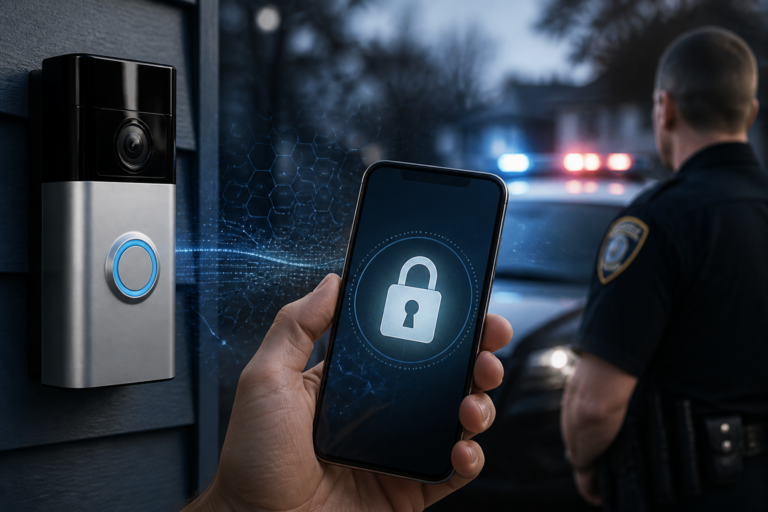
Ring encryption limits police access is the focus of this technology-news update.
Ring Says New Encryption Limits What It Can Give Police: Understanding the Latest Update
Ring, a leading smart home security company, has introduced an encryption overhaul that restricts the type and scope of data it can provide to law enforcement agencies. The update, internally named “Throw Away the Key Encryption” (TAKE), represents a significant change in how Ring handles video footage encryption and access. This development—often summarized as “Ring encryption limits police access”—has important implications for privacy advocates, law enforcement investigations, and Ring users alike.
What Is Ring’s New Encryption and How Does It Work?
TAKE implements a dynamic method for securing video footage. Unlike previous approaches, it rotates encryption keys every five minutes and deletes Ring’s copy of these keys after 24 hours. As a result, while video data remains encrypted in the cloud, Ring holds only limited ability to decrypt or access footage beyond that 24-hour period.
The encryption keys are stored within an AWS Nitro Enclave, a highly secure environment that isolates key management from Ring employees through hardware isolation, cryptographic controls, and strict access restrictions. Temporary keys are released only when authorized cloud services request them for enabled features on a user’s account, such as smart alerts or AI-driven video search.
Though inspired by end-to-end encryption (E2EE) principles, TAKE differs in its operational model. Ring offers full E2EE on some newer camera models, where the company never holds decryption keys. TAKE, by contrast, maintains some cloud processing capabilities by temporarily managing keys before deleting them. Older Ring cameras support only the TAKE system, encrypting footage upon cloud entry.
Ring Says New Encryption Limits What It Can Give Police: Key Details
Ring’s official statements and a recently published white paper explain that the company has updated its Law Enforcement Guidelines to reflect constraints introduced by TAKE. Under valid legal processes such as subpoenas or warrants, Ring can now provide only non-video data—like user account information—and encrypted video files that Ring cannot decrypt after 24 hours.
Specifically, video footage accessible to law enforcement will be encrypted, and Ring will lack the keys to decrypt videos older than one day. While metadata and logs related to account activity remain accessible, the video content itself is effectively protected beyond Ring’s direct reach.
Summary of Limitations on Data Sharing
– Video footage encrypted with rotating keys that Ring deletes after 24 hours
– Ring can provide only encrypted video files, not decrypted content, once keys are deleted
– Non-video account information remains accessible under legal requests
– Access to keys is tightly controlled via AWS Nitro Enclaves, preventing employee access
Impact on Law Enforcement and Investigations
The adoption of TAKE encryption introduces new challenges for law enforcement agencies that rely on Ring footage in criminal investigations. With the limitation on access to decrypted videos, investigators may encounter delays or denials when requesting usable evidence from Ring’s cloud storage.
Potential consequences include:
– Delays or denials in obtaining decrypted video evidence for footage older than 24 hours
– Increased reliance on users voluntarily sharing decrypted footage or keys
– Necessity for alternative investigative methods when video evidence is inaccessible
At the same time, Ring’s approach seeks to balance public safety with individual privacy, reducing risks of unauthorized surveillance or data breaches involving sensitive video content.
Implications for Ring Users and Privacy
For Ring customers, the TAKE encryption system enhances privacy protections. By frequently rotating keys and deleting Ring’s ability to decrypt footage after a short period, users gain greater control over their video data. This may improve confidence in data security against external threats and excessive data sharing.
Key benefits for users include:
– Stronger protection against unauthorized access to cloud-stored video content
– Reduced risk of law enforcement or third parties obtaining decrypted footage without user consent
– The option to choose between TAKE and full end-to-end encryption on compatible devices
However, these privacy enhancements may complicate law enforcement scenarios, requiring users to be more proactive when granting access to footage, especially during emergencies or investigations.
Ring Encryption Limits Police Access: Context Within Industry Trends
Ring’s move toward more restrictive encryption aligns with broader industry trends emphasizing user privacy amid growing concerns over surveillance and data misuse. Other companies, such as Google (with Nest) and Arlo, have implemented varying encryption levels for smart home devices, though their approaches differ in detail and user control.
Compared to fully end-to-end encrypted systems, Ring’s TAKE offers a compromise that preserves cloud-based smart features while limiting company access. This balance addresses regulatory pressures and consumer demands for privacy without fully sacrificing functionality.
Globally, legal and regulatory frameworks continue to evolve around encryption and law enforcement access. The tension between privacy rights and public safety remains a key issue, with Ring’s update illustrating one industry response to these challenges.
Limitations and Unknowns Surrounding Ring’s Encryption Update
Despite detailed disclosures, some aspects of Ring’s encryption update remain unclear or may evolve:
– The exact procedures and conditions under which the Nitro Enclave releases temporary keys
– The frequency with which law enforcement requests coincide with the 24-hour key deletion period
– Technical challenges in scaling TAKE across all devices and accounts
– Potential legal or regulatory mandates that could compel changes to encryption or access policies
Moreover, the impact of this encryption approach on ongoing and future legal requests has yet to be fully tested in courts or regulatory settings. Ring’s ability to balance compliance with privacy protections will be closely monitored as law enforcement adapts.
What Happens Next: Future Outlook for Ring and Law Enforcement
While Ring encryption limits police access, the dialogue among privacy advocates, law enforcement, and technology companies is ongoing. Law enforcement agencies may seek to negotiate or challenge perceived obstacles to investigations, potentially prompting legislative or regulatory changes.
On Ring’s side, further encryption enhancements and user control options may emerge as new devices and cloud services develop. Amazon, Ring’s parent company, could also influence data-sharing policies based on broader privacy commitments or compliance strategies.
Industry standards for smart home security data encryption may shift in response to technological advances and regulatory developments worldwide. Consumers and policymakers will continue to observe how the balance between privacy and public safety evolves.
Key Takeaways
– Ring’s TAKE encryption rotates video keys every five minutes and deletes Ring’s copy after 24 hours, limiting company access.
– Law enforcement can obtain only encrypted video footage and non-video account data under valid legal process.
– TAKE aims to balance privacy protections with cloud-based smart features, distinguishing it from full end-to-end encryption.
– The update complicates law enforcement’s ability to access decrypted video evidence, potentially impacting investigations.
– Ring users gain increased control over their data, enhancing privacy but possibly requiring more active sharing decisions.
– The broader industry and legal environments continue to address encryption, privacy, and law enforcement needs in smart home security.
Conclusion
Ring’s announcement that its new encryption limits what it can provide to police reflects a deliberate shift toward stronger privacy protections for smart home security users. By deploying the TAKE encryption system, Ring restricts its own access to decrypted video footage, thereby limiting what it can legally share with law enforcement. This change highlights the complex balance companies must strike between supporting public safety investigations and safeguarding individual privacy.
As this technology and its legal landscape evolve, stakeholders—including users, law enforcement, privacy advocates, and regulators—will face ongoing challenges related to encrypted smart home data. For Ring users, the update marks a meaningful step toward enhanced control over personal video content. For law enforcement, it signifies a new operational environment that may require adapted approaches and frameworks for accessing digital evidence.
The nuances of Ring’s encryption limits and their broader implications for privacy and security remain critical to monitor. The outcome will influence not only Ring’s platform but also the future trajectory of smart home security technologies and policies worldwide.
Frequently Asked Questions
What recent change did Ring announce regarding encryption and police access?
Ring announced that it has implemented new end-to-end encryption on its video doorbells and security cameras, which limits the company's ability to provide decrypted video footage to law enforcement.
How does Ring's new encryption affect law enforcement requests for video footage?
With the new encryption, Ring cannot access or decrypt footage stored on devices, so it cannot hand over raw video files to police; only encrypted footage can be provided, requiring user consent or cooperation to decrypt.
Who is impacted by Ring's encryption changes?
Ring device owners and law enforcement agencies requesting video evidence from Ring devices are affected, as footage is now protected by end-to-end encryption, enhancing user privacy but limiting police access.
Does the new encryption affect how users access their Ring videos?
No, users retain full access to their video footage through the Ring app, and the encryption ensures only the user and authorized recipients can view the decrypted videos.
What should law enforcement do if they need video footage from a Ring device with encryption enabled?
Law enforcement must obtain consent from the device owner or a warrant to request decrypted footage, as Ring cannot provide decrypted videos without user cooperation under the new encryption system.
Source: Original reporting

Leave a Reply