
Roland Melody Flip AI Music Tool Enhances Creative Workflow
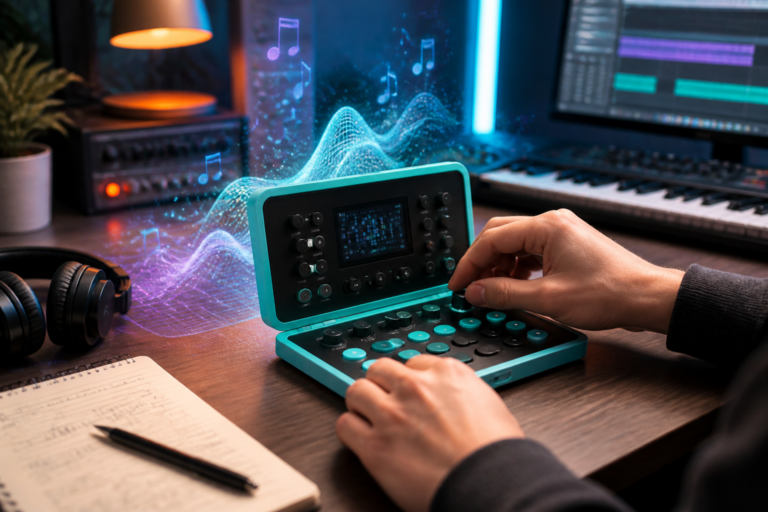
Roland Melody Flip AI music is the focus of this technology-news update.
Roland is Getting into Generative AI Music with Melody Flip
Roland, a longstanding leader in electronic musical instruments and music technology, is expanding into the generative AI music space with the introduction of Melody Flip. This new tool, branded as Roland Melody Flip AI music, marks the company’s first step in applying artificial intelligence to support music creation. Rather than promising instant song production at the push of a button, Melody Flip offers a subtler approach—AI-assisted generation of musical ideas designed to complement musicians’ existing workflows.
The Rise of Generative AI in Music Creation
Generative AI has become an influential force in the music industry, enabling musicians, producers, and creators to explore new methods for composing and producing. Numerous startups and tech companies have developed platforms capable of generating melodies, harmonies, or complete tracks with minimal user input. Roland’s entry signals growing mainstream acceptance and strategic emphasis on AI tools within professional music production.
Roland’s Announcement of Melody Flip
Roland announced Melody Flip on September 4, 2026, marking its initial foray into generative AI-assisted music tools. The company described Melody Flip as a plug-in designed for use within digital audio workstations (DAWs), making it readily accessible to producers and musicians accustomed to software-based music creation. Roland emphasized that Melody Flip is intended to augment, not replace, the creative process by providing fresh melodic ideas and variations.
The plug-in features approximately 250 “Palettes,” which Roland defines as curated collections of musical ideas organized by genre, mood, or style. Users select a Palette as a starting point, and the AI generates melodies or suggests variations fitting that musical framework. This contrasts with tools that generate entire songs automatically, positioning Melody Flip as a collaborative assistant rather than a fully autonomous composer.
Key Details of Melody Flip Technology
While Roland has not revealed detailed technical specifications, Melody Flip appears to employ advanced AI models trained on a diverse range of musical data to produce stylistically appropriate melodies. The plug-in integrates with popular DAWs, allowing musicians to incorporate AI-generated ideas directly into their projects without interrupting established workflows.
The intended users include:
– Songwriters seeking inspiration or melodic variations
– Producers looking to enhance tracks with novel ideas
– Musicians experimenting with new genres or styles
The workflow involves selecting a Palette, inputting initial musical material, and allowing the AI to suggest melodic alternatives or transformations. Users retain control by choosing which ideas to develop, edit, or discard.
Strategic Implications of Roland’s Move into Generative AI Music
Roland’s launch of Melody Flip aligns with a broader strategy of innovation and adaptation to emerging trends in music technology. Renowned for synthesizers, drum machines, and electronic instruments that have shaped modern music production, Roland is now positioning itself at the intersection of traditional hardware expertise and cutting-edge software technology.
Compared to competitors like Suno, which offers fully automated song generation, Roland’s approach is more measured and artist-focused, emphasizing collaboration over automation. This strategy may help Roland maintain its reputation for quality and reliability while exploring new creative tools.
Additionally, Roland’s existing ecosystem of hardware and software products could facilitate unique hardware-software integrations in the future, potentially setting new standards for AI-assisted music creation.
Potential Industry Impact
– Encourages broader adoption of AI tools among professional and amateur musicians
– May prompt competitors to develop AI solutions that better align with traditional workflows
– Strengthens Roland’s position as an innovator in music technology
Impact on Users, Businesses, and Developers
For musicians and producers, Melody Flip provides a practical means to expand creative options without requiring deep AI expertise or complex programming. The Palette system enables users to explore unfamiliar genres or styles, lowering barriers to experimentation.
From a business perspective, generative AI tools like Melody Flip have the potential to streamline aspects of the creative process, possibly reducing production time and costs. However, they also raise questions about the role of human creativity and the value of AI-generated components in commercial music.
Developers and third-party integrators may find opportunities if Roland offers APIs or SDKs for Melody Flip, though no such plans have been disclosed. Integration with other music tools or hardware could foster an ecosystem encouraging customization and enhanced functionality.
Comparison within the Generative AI Music Industry
Melody Flip enters a competitive market featuring several generative AI music tools. Unlike platforms focusing on complete song generation, Melody Flip’s strength lies in enhancing the creative process by generating and transforming melodic ideas. Roland’s decades of experience with musical instruments may lend credibility and familiarity that purely software-based startups lack.
Current industry trends show increasing interest in AI tools that assist rather than replace musicians. Melody Flip’s design philosophy aligns with this trend by positioning AI as a creative partner, not a substitute.
Limitations and Unknowns Regarding Melody Flip
Significant details about Melody Flip’s AI models, training data, and the extent of user customization remain undisclosed. It is unclear how the tool handles complex musical inputs or adapts to highly specialized or niche genres.
Potential limitations include:
– The quality and originality of AI-generated melodies compared to human compositions
– The degree of user control over AI output and editing options
– Copyright and intellectual property concerns related to AI-generated music
As with many generative AI technologies, challenges remain in ensuring the tool complements rather than restricts creative freedom.
Outlook and Future Developments
Roland has not announced a specific release date for Melody Flip beyond its initial unveiling, nor detailed plans for updates or feature expansions. It is expected that the company will refine the tool based on user feedback and possibly integrate it more deeply with Roland’s hardware products over time.
The broader music technology industry will likely observe closely how Roland’s entry influences market dynamics, particularly whether it encourages established manufacturers to adopt AI music tools. The development of Melody Flip could serve as a benchmark for balancing AI innovation with musicianship and user control.
Key Takeaways
– Roland Melody Flip AI music is a new generative AI plug-in designed to augment melodic creativity within DAWs.
– The tool offers around 250 genre-themed Palettes, promoting exploration and idea generation rather than automatic song creation.
– Roland’s strategy emphasizes collaboration between AI and musicians, in contrast to fully automated competitors.
– Potential impacts include expanded creative workflows, business efficiency gains, and new opportunities for developer integration.
– Important questions remain regarding technical details, creative limitations, and intellectual property issues.
– Future developments may deepen hardware-software integration and influence wider industry adoption of AI music tools.
Conclusion
Roland’s announcement of its entry into generative AI music with Melody Flip marks a notable shift for a company primarily known for hardware innovation. By focusing on melodic idea generation rather than full track automation, Roland signals a cautious approach to AI in music that prioritizes user control and creative collaboration.
Musicians and producers stand to gain new ways to spark inspiration and diversify their work, while businesses and developers face both opportunities and challenges in integrating AI tools responsibly. As Melody Flip evolves and Roland potentially expands its AI offerings, the music technology community will gain valuable insights into the changing relationship between human creativity and artificial intelligence.
For now, the industry awaits further details on Melody Flip’s capabilities and release schedule. The coming months will reveal how effectively Roland leverages its legacy and technological resources to establish a meaningful presence in the generative AI music landscape.
Frequently Asked Questions
What is Melody Flip by Roland?
Melody Flip is a generative AI music feature introduced by Roland that helps users create new musical ideas by transforming melodies using artificial intelligence.
Who can use Melody Flip?
Melody Flip is designed for musicians, producers, and creators interested in AI-assisted music composition, typically accessible to Roland instrument owners or users of compatible software platforms.
Is Melody Flip available now and how can I access it?
Roland has announced Melody Flip as part of their generative AI music initiatives, with availability likely through specific Roland instruments or software updates; exact release dates and access methods should be confirmed on Roland's official channels.
Does Melody Flip support integration with existing Roland hardware and software?
Melody Flip is expected to be compatible with select Roland hardware and software products, enhancing composition workflows, but users should verify compatibility with their specific models or platforms.
What privacy or data security measures are involved with Melody Flip?
Roland has not publicly detailed specific privacy or data security policies for Melody Flip; users should consult Roland's official privacy statements to understand data handling related to AI features.
Source: Original reporting

Leave a Reply