
best monitors 2026: Top Models and Tech Trends Revealed
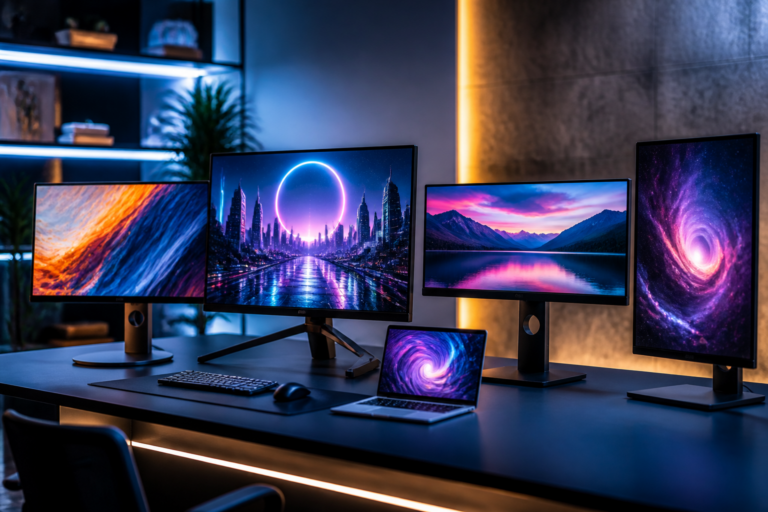
Best monitors 2026: Top picks for gaming, 4K, HDR, and more
As display technology advances, choosing the right monitor in 2026 demands careful attention to the latest innovations and individual user requirements. The best monitors 2026: Top picks for gaming, 4K, HDR, and more showcase notable improvements in panel technology, refresh rates, color accuracy, and connectivity. Whether you are a gamer seeking smoother motion, a creative professional needing precise color reproduction, or a general user looking for versatile performance, this comprehensive overview highlights the leading monitor options and industry trends shaping this year.
Advances in monitor technology shaping 2026
Display technology has progressed steadily in recent years, and 2026 continues this trend with significant developments in panel types, refresh rates, HDR capabilities, and connectivity.
Panel technologies: OLED, Mini-LED, and emerging types
OLED panels remain prized for their exceptional contrast and true blacks, though concerns about burn-in persist, particularly for users displaying static content such as spreadsheets. Mini-LED technology offers an appealing alternative by providing high contrast and brightness without the risk of burn-in. IPS Black technology, exemplified by models like the Dell Ultrasharp U2724DE, enhances IPS panel contrast, approximately doubling it compared to traditional IPS displays. While emerging display technologies are under exploration, widespread adoption has yet to materialize by mid-2026.
Refresh rates, response times, and color accuracy
High refresh rates have become standard in gaming monitors, with 120Hz and above delivering smoother motion and lower latency. Some monitors now combine 120Hz refresh rates with IPS panels, catering to both productivity and gaming needs. Response times continue to improve, reducing ghosting and motion blur. For creative professionals, color accuracy remains paramount, with many models offering wide color gamuts and factory calibration to support demanding workflows.
HDR standards evolution and support expansion
HDR support has broadened, though implementation varies considerably across models. Peak brightness and compliance with standards such as HDR10 and DisplayHDR influence the quality of HDR content reproduction. While certain monitors excel with high peak brightness and rich color volume, others provide more limited HDR experiences. Achieving consistent HDR performance remains an industry challenge.
Connectivity and ergonomic design trends
Connectivity options have expanded, with Thunderbolt 4, USB-C, and Ethernet ports increasingly common in premium monitors. These features facilitate streamlined setups, particularly for laptop users aiming to minimize cable clutter. Ergonomic improvements include adjustable stands offering height, tilt, swivel, and pivot controls to accommodate diverse workspace requirements and enhance comfort.
Best monitors 2026: Top picks for gaming, 4K, HDR, and more
Selecting the best monitor involves balancing resolution, refresh rate, HDR support, color gamut, and intended use. The following categories outline key trends and highlight standout models based on comprehensive testing and expert evaluation.
Gaming monitors
– Key attributes: High refresh rates (120Hz and above), low input lag, adaptive sync technologies (e.g., G-Sync, FreeSync), and fast response times.
– Trends: Increasing availability of IPS panels with gaming-grade speeds, improved motion clarity, and enhanced HDR support.
– Considerations: Resolution often favors 1440p or 1080p to achieve higher frame rates, with 4K less common due to performance demands.
4K monitors
– Key attributes: High resolution (3840×2160) for detailed imagery, suited to productivity and content creation.
– Trends: Integration of 4K resolution with reasonable refresh rates, although 4K at 120Hz remains a premium and costly option.
– Considerations: Price and performance trade-offs are significant; many models offer 4K at 60Hz, limiting gaming suitability.
HDR monitors
– Key attributes: Peak brightness exceeding 600 nits, wide color gamut, and adherence to standards such as DisplayHDR 600 or higher.
– Trends: Mini-LED backlighting enhances HDR contrast and local dimming, improving visual depth.
– Considerations: HDR quality varies; users should verify actual peak brightness and certification rather than rely on marketing claims.
All-rounders and professional-grade displays
– Key attributes: Balanced specifications supporting productivity, multimedia, and moderate gaming.
– Examples: Monitors featuring IPS Black technology, 120Hz refresh rates, extensive connectivity including Thunderbolt 4 and Ethernet, and ergonomic designs.
– Considerations: Resolutions commonly settle at 1440p to balance sharpness and performance; HDR support may be limited.
Impact of new monitor technologies on users and industries
The latest monitor innovations affect different user groups and sectors in distinct ways.
Gamers
Improvements in refresh rates and adaptive sync technologies reduce motion blur and screen tearing, enabling smoother, more responsive gameplay. The availability of IPS panels with 120Hz refresh rates allows gamers to enjoy vibrant colors without compromising performance.
Creative professionals
Advancements in color accuracy and HDR fidelity support precise photo and video editing. Monitors with factory calibration and wide color gamuts cater to workflows requiring critical color grading and content creation.
Business environments
Enhanced connectivity simplifies multi-device setups, while ergonomic designs support extended use. Features such as USB-C with power delivery and Ethernet integration streamline workstations, especially for remote and hybrid work models.
Developers and software creators
Expanded display capabilities encourage the development of software and content optimized for higher resolutions, wider color spaces, and HDR, fostering richer user experiences and more sophisticated visual applications.
Market and industry context: Trends and competitive landscape in 2026
Manufacturers continue to prioritize innovation in panel technology and connectivity, emphasizing versatility. Leading brands including Dell, Asus, LG, and Samsung frequently update their lineups to address diverse consumer demands.
Emerging technologies such as microLED and flexible displays remain in early stages, indicating potential future shifts. Consumer expectations increasingly focus on seamless integration with laptops and other devices, influencing monitor design and features.
Compared to previous years, 2026 features incremental improvements rather than radical breakthroughs, reflecting maturity in display technology. Regional adoption varies, with higher demand in markets emphasizing gaming and professional content creation.
Limitations and unknowns in the 2026 monitor landscape
– Performance gains in refresh rates and color accuracy have plateaued in some segments, with diminishing returns beyond certain thresholds.
– Compatibility challenges persist with legacy hardware and software that may not fully support newer standards like Thunderbolt 4 or advanced HDR profiles.
– HDR standardization remains uneven, resulting in inconsistent user experiences across monitors.
– Supply chain constraints and manufacturing complexities occasionally affect availability and pricing, particularly for advanced technologies like Mini-LED.
What to expect next: Future developments in monitor technology post-2026
Beyond 2026, microLED displays are expected to offer superior brightness and durability without burn-in risks, potentially challenging OLED and Mini-LED technologies. Flexible and foldable monitors may gain traction, enabling new form factors and portability.
Software ecosystems are anticipated to evolve to better utilize high-resolution, HDR, and high-refresh-rate displays, supporting richer content and applications. Sustainability initiatives targeting energy efficiency and reduced environmental impact will likely influence manufacturing and design.
Conclusion: Navigating the best monitor choices in 2026 and beyond
The best monitors 2026: Top picks for gaming, 4K, HDR, and more reflect a careful balance of performance, versatility, and technological refinement. Consumers should select monitors aligned with their specific needs—whether gaming responsiveness, resolution clarity, HDR quality, or professional color accuracy—while considering connectivity and ergonomic features.
Remaining informed about ongoing advancements and industry trends will help users make choices that remain relevant over time. Although some technologies have matured, emerging innovations promise to reshape the display landscape in the coming years.
Key takeaways
– High refresh rates combined with IPS and IPS Black panels enhance gaming and general use experiences.
– 4K monitors provide greater detail but often involve higher costs and lower refresh rates.
– HDR quality varies significantly; peak brightness and certification are more reliable indicators than marketing.
– Connectivity features like Thunderbolt 4 and USB-C increase versatility, especially for laptop users.
– Future developments in microLED and flexible displays indicate the next wave of innovation.
Frequently Asked Questions
What are the key features to look for in the best monitors for gaming in 2026?
Look for high refresh rates (120Hz or higher), low response times (1ms to 5ms), adaptive sync technologies like G-Sync or FreeSync, and good color accuracy with HDR support for an immersive gaming experience.
Are 4K monitors widely available and affordable in 2026?
Yes, 4K monitors have become more affordable and widely available due to advances in display technology and manufacturing, with options ranging from budget to premium models.
Which connectivity options are essential for modern monitors in 2026?
Essential connectivity includes HDMI 2.1 for high bandwidth, DisplayPort 1.4 or higher, USB-C with power delivery, and multiple USB ports for peripherals.
Can HDR monitors improve the viewing experience for non-gaming use?
Yes, HDR monitors provide better contrast and color accuracy, enhancing video streaming, photo editing, and general multimedia consumption.
What limitations should consumers be aware of when choosing a monitor in 2026?
Consider potential issues like compatibility with older hardware, higher power consumption in ultra-high-resolution models, and the need for a powerful graphics card to fully utilize 4K and high refresh rates.
Source: Original reporting

Leave a Reply