
China fueling Americas data centers with advanced chip techn
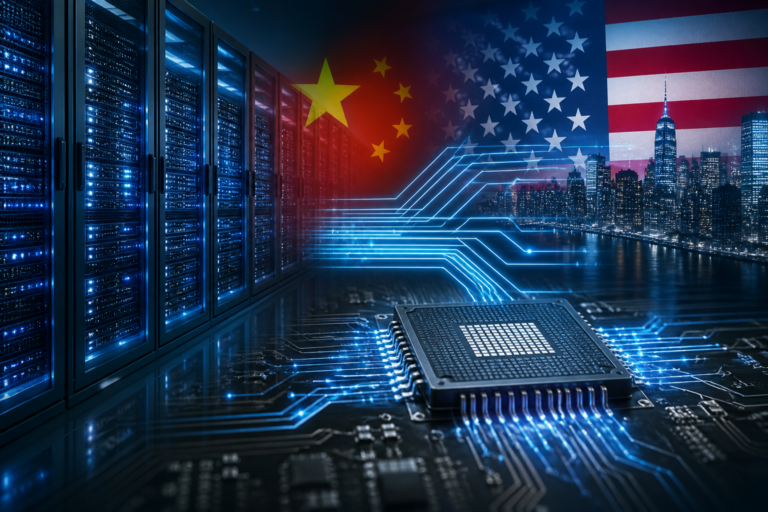
China fueling Americas data centers is the focus of this technology-news update.
Is China Secretly Fueling America’s Data Center Rage?
As the United States faces increasing controversy over the rapid expansion of data centers, a critical question has arisen: Is China secretly fueling America’s data center rage? Recent investigations and social media analyses suggest that Chinese actors may be influencing public opinion against data center projects, intensifying local opposition and complicating growth in the sector. This issue extends beyond infrastructure concerns, touching on national security, economic development, and the future of technology in America.
Why This Update Matters
Data centers are vital infrastructure supporting cloud computing, AI development, and digital services used by millions of Americans daily. Yet, as these facilities expand, concerns about their environmental impact, energy consumption, and community effects have sparked significant local resistance. Reports of foreign influence operations amplifying opposition narratives highlight the importance of understanding the role international players—particularly China—may play in this evolving landscape. The implications reach beyond planning disputes to encompass cybersecurity, geopolitical strategy, and the integrity of American technology infrastructure.
What Happened: Recent Developments in U.S. Data Center Controversies
A report shared by Axios and highlighted by social media platform X’s safety team reveals that approximately 200 accounts linked to a suspected Chinese bot farm have actively promoted anti-data center sentiment across American social media. These accounts circulated content warning of the strain data centers place on electrical grids and the resulting increase in utility prices. Some posts depicted data center operators as profiteers exploiting the public, using cartoons and exaggerated claims.
This online activity has had tangible consequences. Opposition campaigns in Virginia, for example, have reportedly delayed or obstructed nearly $46 billion worth of data center projects, demonstrating real-world impacts beyond digital discourse. Despite identifying these accounts, the platform has not disclosed specific enforcement actions such as suspensions or deletions, leaving the effectiveness of mitigation efforts unclear.
China’s Role in America’s Data Center Ecosystem
China’s involvement in the U.S. data center ecosystem can be considered through several perspectives:
– Investments and Partnerships: Although direct Chinese ownership of U.S. data centers is limited due to regulatory scrutiny, Chinese companies hold significant stakes in global technology supply chains that indirectly support American facilities.
– Hardware and Software Components: Many servers, networking equipment, and storage devices used by data centers incorporate components manufactured or designed in China. This dependency introduces potential vulnerabilities in supply chain security.
– Supply Chain Vulnerabilities: Security experts have long warned about risks stemming from reliance on foreign hardware and software, including possibilities of embedded malware or backdoors exploitable for espionage or sabotage.
However, public information about specific security incidents linked to Chinese technology embedded in American data centers remains scarce, making it difficult to quantify the exact level of risk.
Impact on Users, Businesses, and Developers
Potential security and operational risks associated with Chinese technology or influence campaigns affect multiple stakeholders:
– Cloud Service Customers: Organizations relying on cloud providers may face concerns about data privacy and service integrity if underlying infrastructure includes compromised components.
– Enterprises and Developers: IT professionals managing data center environments must navigate complex security challenges, balancing performance and compliance with vigilance against foreign interference.
– Broader Business Implications: Trust in technology providers is essential for business continuity and investor confidence. Perceptions of foreign influence can trigger increased regulatory scrutiny and operational difficulties.
Over time, these factors could slow innovation and deployment of advanced technologies such as AI, which depend heavily on robust and secure data center infrastructure.
Is China Secretly Fueling America’s Data Center Rage?
Evaluating whether China is secretly fueling America’s data center rage requires nuanced analysis. The identified social media activity from suspected Chinese bot farms indicates a deliberate effort to sway public opinion against data centers, emphasizing themes resonant with existing concerns about energy use and community impact.
Nevertheless, experts caution against attributing all opposition to foreign influence. Jim Prosser, a former Twitter communications executive, warns that labeling local resistance as a “Chinese psyop” risks dismissing legitimate grievances from communities directly affected by data center developments. He notes that bipartisan opposition from leaders such as Texas Governor Greg Abbott and New York Governor Kathy Hochul likely reflects authentic local concerns rather than orchestrated foreign campaigns.
In summary, while Chinese influence operations appear to exacerbate tensions, they do not fully explain the widespread and multifaceted resistance to data centers in America. Limited transparency about investment sources and supply chains adds to public suspicion but complicates objective assessment.
Comparison and Context: Global Data Center Supply Chains and Geopolitical Risks
The U.S. is not alone in facing foreign involvement in critical technology infrastructure. Many countries depend on global supply chains that include Chinese hardware and software, raising similar security and influence concerns.
Geopolitical tensions increasingly shape technology disputes worldwide, with parallels in debates surrounding 5G infrastructure and semiconductor manufacturing. China’s role as a major manufacturer and supplier in the global technology ecosystem makes disentangling dependencies complex and costly.
This context highlights the broader challenge of balancing economic interdependence with national security priorities in a highly interconnected world.
Limitations and Unknowns: What Remains Unclear
Despite growing evidence of Chinese influence efforts, significant uncertainties remain:
– Verification Difficulties: Confirming the true origin and intent of social media accounts and influence campaigns is inherently challenging, with risks of misattribution or incomplete data.
– Extent of Supply Chain Risks: Public information about specific vulnerabilities or incidents involving Chinese technology in U.S. data centers is limited, hindering thorough risk assessment.
– Potential Biases: Media and industry narratives may be influenced by political or commercial agendas, emphasizing some threats while downplaying others.
These gaps underscore the need for cautious interpretation and further investigative transparency.
What Happens Next: Trends and Potential Outcomes for U.S. Data Centers
Looking forward, several developments are likely to shape the future of America’s data center landscape amid foreign influence concerns:
– Regulatory and Legislative Action: Policymakers may introduce stricter rules on foreign investments, supply chain audits, and cybersecurity standards for data centers.
– Industry Initiatives: Data center operators and cloud providers are expected to enhance supply chain transparency, strengthen security measures, and improve community engagement to rebuild trust.
– U.S.-China Technology Relations: Ongoing geopolitical tensions could lead to further decoupling or selective collaboration, affecting hardware availability and investment flows.
Government, industry, and local communities will need to navigate these dynamics carefully to ensure the continued growth and security of critical data center infrastructure.
Key Takeaways
– Chinese-linked social media accounts have been identified as amplifying opposition to U.S. data center projects, contributing to local resistance.
– Concerns about supply chain vulnerabilities involving Chinese technology in American data centers persist but lack full public clarity.
– Not all opposition to data centers can be attributed to foreign influence; many local concerns are genuine and bipartisan.
– The issue reflects broader global challenges in balancing technological interdependence with national security.
– Future regulatory, industry, and geopolitical actions will significantly influence how data centers evolve in the U.S.
Conclusion
Is China secretly fueling America’s data center rage? The answer is complex. While Chinese influence operations actively exploit existing debates around data center expansion, they represent only one factor among a complex mix of local, economic, and political drivers of opposition. Transparency gaps and supply chain dependencies complicate the picture but do not fully explain widespread resistance.
For consumers, businesses, and policymakers, a balanced approach is essential—one that acknowledges legitimate local concerns, strengthens supply chain security, and carefully monitors foreign influence without dismissing community voices. As data centers remain foundational to America’s digital future, understanding every dimension of this issue—including the extent of China’s role—will be critical for crafting informed, effective responses.
Frequently Asked Questions
Is China directly responsible for the recent surge in data center demand in the US?
There is no conclusive evidence that China is directly fueling the recent surge in US data center demand. The growth is primarily driven by increased digital services, cloud computing, and data consumption within the US and globally.
How does Chinese technology impact US data center infrastructure?
Chinese technology companies do supply some hardware components used in data centers worldwide, but US data centers also rely heavily on domestic and other international suppliers. Concerns around supply chain security have led to increased scrutiny of Chinese hardware.
Are there security risks associated with Chinese involvement in US data centers?
Security experts express concerns about potential risks related to hardware or software from Chinese firms, prompting US regulations and audits. However, widespread evidence of malicious activities connected to Chinese technology in US data centers is lacking.
Who is most affected by the dynamics between China and US data center growth?
US cloud service providers, data center operators, and government agencies are most affected by supply chain considerations and regulatory policies related to Chinese technology. End-users experience indirect impact through service availability and pricing.
What can US companies do to mitigate risks linked to Chinese technology in data centers?
Companies can diversify their hardware suppliers, implement robust security audits, comply with US government guidelines, and invest in domestic manufacturing to reduce dependency on Chinese technology.
Source: Original reporting

Leave a Reply