
New York City 911 system failure disrupts emergency response
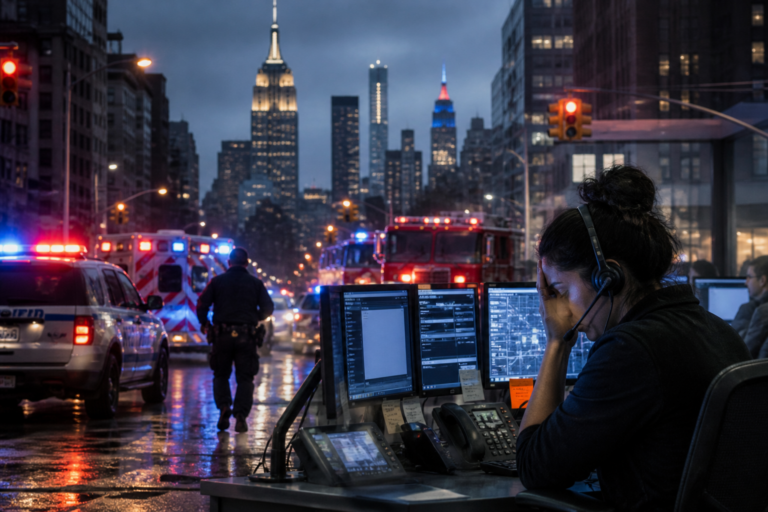
New York City 911 system failure is the focus of this technology-news update.
New York City 911 System Missed 1,700 Calls Due To Software Update
Reliable emergency communication systems are essential for public safety, ensuring timely dispatch of help when every second counts. A recent incident involving the New York City 911 system, however, has raised serious concerns. Due to a software update, the city’s 911 system missed approximately 1,700 calls during a critical early morning period. This disruption exposes significant challenges in managing and deploying software within vital public safety infrastructure, highlighting the risks posed by technological failures in emergency services.
What Happened: Software Update Disrupts 911 Call Handling
On August 18, 2026, a software update was applied to part of New York City’s 911 emergency call system, specifically affecting the Bronx call center. The update, provided by Motorola, began at roughly 3:13 a.m. and caused a major malfunction that went unnoticed until around 10 a.m. During this interval, the Bronx center registered 5,659 calls, but an estimated 1,700 connected calls were silent to emergency operators. This prevented operators from communicating with callers to assess or respond to emergencies effectively.
The precise technical cause of the failure remains under investigation. It is clear, however, that the software update introduced a fault blocking audio transmission to call handlers. Some calls were rerouted to other centers, but overall system integrity was compromised, and about 400 callers never connected at all.
The scale and duration of this disruption mark it as a significant event in the history of emergency communications in New York City. Over roughly seven hours, 1,700 calls were effectively silent on the receiving end, potentially leaving many emergencies unattended or delayed. The affected calls mainly originated from the Bronx, though details about the types of emergencies involved—medical, fire, or police—have not been publicly disclosed.
City emergency services and technology teams worked to restore system functionality once the problem was identified. The failure was revealed publicly only after media inquiries, as city officials initially withheld notification, raising questions about transparency and accountability.
Impact on Users and Emergency Services
– Potential Consequences for Callers: The inability to communicate with 911 operators may have delayed emergency responses, potentially endangering lives. The outcomes of these missed calls are still under review.
– Emergency Services Response: After detecting the issue, efforts were made to reroute calls and normalize operations. Emergency agencies likely coordinated to manage resources and mitigate harm during the outage.
– Public Communication: The delay in informing the public has drawn criticism, with calls for greater transparency when emergency systems are compromised.
Technical Analysis: Causes and Challenges
The New York City 911 system depends on complex software integrating call routing, audio processing, and database management. The Motorola update was intended to maintain or improve system performance but instead introduced a critical bug. Although details of the update remain unavailable, common causes in similar cases include compatibility issues, insufficient testing, or coding errors affecting audio transmission.
Deploying software updates in mission-critical environments like 911 dispatch centers involves unique challenges. Testing must replicate real-world call volumes and emergency scenarios to avoid disruptions. This incident suggests that such procedures were either insufficient or bypassed. Whether this software version was deployed to other call centers is still under investigation, raising concerns about potential systemic vulnerabilities.
Comparison and Context: Emergency System Software Failures Elsewhere
Software-related failures in emergency communication systems are not unique to New York City. Other municipalities have experienced outages due to hardware faults, network problems, or software glitches. However, the scale of the New York City 911 failure—thousands of missed calls over several hours—is particularly noteworthy given the city’s population density and reliance on prompt emergency response.
Some cities have implemented redundant systems and comprehensive multi-phase testing to reduce update-related outages. These experiences emphasize the importance of layered fail-safes, rigorous testing protocols, and transparent communication to maintain public trust.
Limitations and Unknowns
– Investigations continue to determine why the software update caused the malfunction and whether Motorola or city officials bear responsibility for inadequate testing or deployment.
– Detailed information about the affected call types, emergency outcomes, and whether similar software versions were used elsewhere remains unavailable.
– The long-term impact on the reliability of New York City’s 911 infrastructure is uncertain pending system audits and remediation efforts.
What Happens Next: Steps Toward Resolution and Prevention
In response, New York City officials are reviewing the update process and software integrity. Potential measures include:
– Rolling back or patching the faulty software version to restore full functionality.
– Conducting thorough audits of update testing procedures and vendor oversight.
– Enhancing monitoring to detect and respond to system anomalies more rapidly.
– Improving public communication policies to promptly inform residents about emergency service disruptions.
The broader implications extend beyond New York, underscoring the critical need for robust governance, rigorous validation, and transparency in emergency system software development and deployment nationwide.
Key Takeaways
– The New York City 911 system failure underscores the risks of deploying untested or inadequately tested software in critical public safety infrastructure.
– Approximately 1,700 calls over seven hours were affected, with some callers never connecting to emergency responders.
– Transparency and timely public notification were lacking, raising accountability concerns.
– Investigations continue, focusing on improving testing, vendor management, and fail-safe protocols.
– This incident serves as a cautionary example for other cities relying on complex software for emergency communications.
Conclusion
The New York City 911 system failure demonstrates how even well-established emergency services can be vulnerable to technological disruptions. As investigations proceed, the focus will be on identifying the exact causes and preventing future breakdowns. For residents, this incident highlights the vital importance of resilient and transparent emergency infrastructure. For technology providers and public officials, it serves as a reminder to prioritize rigorous testing, clear communication, and robust system design. Observers should monitor forthcoming updates on the investigation’s findings and the city’s plans to safeguard its emergency response capabilities.
Frequently Asked Questions
What caused the New York City 911 system to miss 1,700 calls?
A recent software update in the New York City 911 dispatch system led to technical issues that resulted in approximately 1,700 emergency calls being missed.
Who was affected by the missed 911 calls in New York City?
Residents and visitors in New York City who attempted to reach emergency services during the period affected by the software update experienced delays or failures in their calls being received.
Has the software issue in the NYC 911 system been resolved?
Authorities have addressed the software glitch by rolling back or fixing the update, restoring normal functionality to the 911 dispatch system.
What steps is New York City taking to prevent similar 911 system failures in the future?
The city is reviewing its software update procedures, increasing system testing before deployment, and enhancing monitoring to avoid future disruptions in emergency call handling.
Does the 911 system software update impact user privacy or security?
There have been no reports indicating that the software update compromised user privacy or emergency call data security during the incident.
Source: Original reporting

Leave a Reply